
Preventive Health Screening in Dogs: Cookie’s Annual Heartworm and Tick-Borne Diseases Test
The American Heartworm Society recommends annual heartworm testing for all dogs.
The recommendation makes perfect sense to me, and I would do it even without being told. When I called to make the appointment, I was surprised to be told that Cookie had the test last year, and I didn’t have to do it this year if I didn’t want to. Either way, I wanted to.

Heartworm disease sucks
Heartworm is the last thing I want to be taking any chances with.
I give heartworm preventive religiously, year-round. For those who might wonder why year-round, I can tell you that we’ve been finding mosquitoes in the house throughout the winter, even on days when it was -20 outside. Yeah, I was shocked too.
That aside, any day when temperatures outside got milder, you could see the odd mosquito buzzing around. I agree that it is pretty crazy, but it’s no word of a lie.
Just one bite
All it takes is one bite from one mosquito.
With a bit of bad luck, one bite from one mosquito is all it takes for a dog to get infected.
Unlike with many other things, heartworm prevention is a no-brainer. With some other diseases, trying to decide which is the lesser of the evil can be hard. With heartworm, it is easy. Heartworm infection is the worse of the evil hands down.
Prevention
We use HEARTGARD® Plus.
Interestingly, we have to make a special order for this, because all other clients at our vet clinic use something else now. If I remember correctly, they are using a combination of Frontline and one other product I don’t remember.
Many preventive products out there aim to address more than one problem at once. But that often makes them better doing one job than the other. We opted for a product which had the best track record for heartworm protection.
While I would love to have one safe product to address heartworm and tick and everything else under the sun, having something that our dogs always tolerated without problems and I can reasonably trust to prevent heartworm is good enough for me.
I always get a bit nervous waiting for the results.
Cookie is negative for the infection
I am very happy that Cookie’s heartworm test was negative.
Sometimes we test for tick-borne diseases, and sometimes we don’t. This time we did because of all the ticks we kept finding on Cookie last fall.
With tick preventives, I don’t see the choice as clear-cut. The disease they transmit are bacterial and, at least theoretically, treatable with antibiotics. That weighs against the fact that Cookie had a major reaction to Advantix when we tried using it on her.
After much deliberation and research of available options, we decided to go with natural options, at least for now.
Tick-borne diseases
Cookie tested negative for tick-borne diseases also.
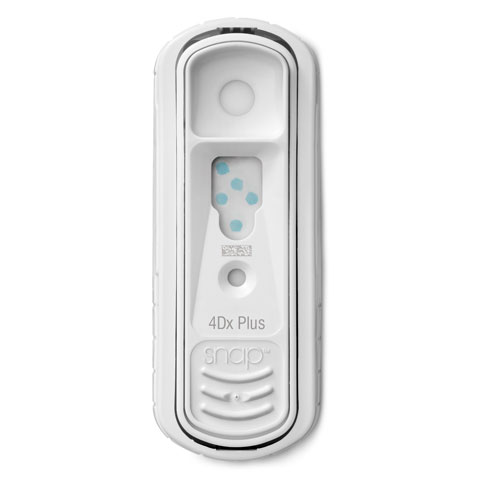
Our clinic does in-house testing, which is quite convenient. They use the SNAP 4Dx Plus Test.
The one test screens for heartworm, Lyme disease, Ehrlichia and anaplasma. So for now, we can relax a bit; Cookie hasn’t contracted any of the vector-borne diseases that are common around here.
We will, naturally keep up with the heartworm preventive and monitoring the tick situation. So far, this year, we haven’t found any on Cookie.
Do you test your dog annually for vector-borne diseases?
Related articles:
Canine Heartworm Infection: Don’t Let Heartworm Become A Heartbreak!
Canine Heartworm Disease: Veterinarians Share Insights About Heartworm Disease And Prevention in Dogs
Further reading:
Heartworm in Dogs