
My Dog Has a Fever: Fever (Pyrexia) in Dogs
Fever is one of the things that you might notice only when you’re paying close attention.
You’re more likely to notice accompanying signs such as:
- decreased appetite
- lethargy
- weakness
- shivering
- fast breathing or panting
- changes in gum color
- signs of dehydration
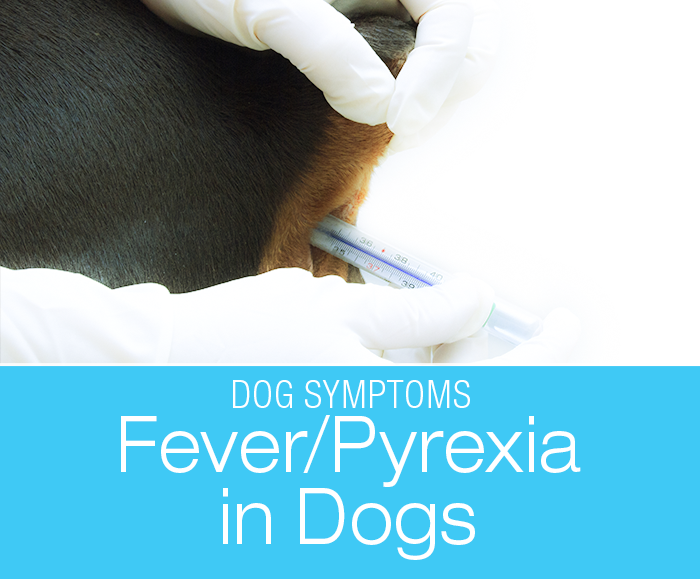
These symptoms are not very specific, though, and can be caused by other things as well. To confirm, unfortunately, your dog has to suffer the unpopular thermometer in their bum.
Introduction
Fever is higher than normal body temperature. An abnormal increase in body temperature can happen as a result of external or internal causes.
Hyperthermia, or heatstroke, is caused by either:
- inadequate means of heat dissipation, generally due to extreme environmental conditions, or
- problem with thermoregulation
Fever, on the other hand, is increased body temperature as part of your dog’s immune response. Severely high body temperature can be life-threatening regardless of the cause.
Further reading: Heatstroke in Dogs: What Happens In The Dog’s Body with Heatstroke?
Definition
A dog’s normal temperature falls between 99.5 and 102.5 Fahrenheit. A temperature of 103.5° F or higher is considered a fever.
The range between 102.5 and 103.5 is somewhat ambiguous. A dog who has been running around on a hot day may temporarily have a temperature in this range and be perfectly normal. On the other hand, a dog with a temperature of 103.2 who has just been lying around probably has a fever.
Potential causes
Infections are a common, but not sole trigger for fever in your dog. Other causes include:
- immune-mediated condition
- inflammatory conditions
- metabolic and endocrine conditions
- poisoning
- certain medications
- cancer
Vaccination can cause a low-grade fever for about 24 to 48 hours after administration. Stress, agitation, exercise, and high ambient temperatures can also increase your dog’s body temperature.
Further information: Pyrexia in Dogs
Understanding fever
Like any symptom, fever is not a disease. Rather, it is a result of your dog’s body trying to deal with whatever the underlying cause may be.
The purpose of a fever is to enhance the immune response and to create an inhospitable environment for invading organisms. As such, fever is one of the powerful tools your dog’s immune system deploys to fight disease. The last thing you want to do is to disarm it at the time of illness.
For example, elevated body temperature slows down bacterial replication and helps certain immune cells work better. Mild fever is functional and assists in the healing process.
On the other hand, fever that is too high or lasts too long, is detrimental and potentially life-threatening. The trick is to know when to allow the fever to do its thing and when to intervene.
When temperatures reach 106 F, serious and fatal complications can occur.
My dog has a fever
Figuring out what caused your dog’s fever is not always easy. The immune system is ramped up to deal with something—but what?
Could your dog catch an infection? Did you recently travel? was your dog recently vaccinated? Did you travel anywhere new? Does your dog have any allergies, or could they have been bitten by an insect? Your veterinarian will need to get a detailed history and run tests to determine the cause.
While at times it might be necessary to treat the fever itself, it won’t do a whole lot of good without treating the cause.
Further information: Pyrexia in Dogs
When my dog’s temperature rises to 103.5° F, I’m at the vet. However, if my dog’s fever isn’t as high but they have other concerning symptoms, I am at the vet as well.
If your dog’s temperature hits about 104.5° F, it’s an emergency.
Related articles:
Symptoms to Watch for in Your Dog: The Big Picture
Hyperthermia in Dogs: Heatstroke Is No Light Matter!
Changes in Mucous Membrane Color: What Can Your Dog’s Gums And Tongue Tell You?
Further reading:
Fever in Dogs
Great information. Like you, if either of my dogs are showing a fever, my first instinct is to call our vet. I’d rather get to the bottom of it quickly than hold off and risk the root cause getting worse. Better safe than sorry, right?
It is so important to pay attention to our dogs. A thermometer is a handy tool to get some information, so we can decide what the next best step is.
This is a great reminder to check your dogs temperature. It’s not something most people think if but it’s often the first sign that something isn’t right.
Great information and I run to the vet with anything if I am concerned about Layla
Very informative. I’m with you, a fever, especially accompanied by other symptoms or an especially high fever, for sure warrants a trip to the vet. I’ve always thought it was interested that dogs have higher normal body temperatures than humans. It makes them the perfect snuggle buddies on cold winter nights.