
Canine IVDD Back Brace: How Is WiggleLess® Helping to Provide Support for Dogs Suffering from or Prone to IVDD?
Canine intervertebral disc disease (IVDD) is a common orthopedic problem affecting the spine.
Injuries and diseases that affect the spine are quite dramatic and disabling. Some breeds are particularly susceptible to the problem. The affected breeds include Dachshunds, Beagles, Basset Hounds and Shih Tzus.
Further information: Intervertebral Disc Disease (IVDD) in Dogs
Thank you, Lisa Luckenbach, for sharing your story.

June and Henry
I was dumbfounded as our vet repeated the same strange term about my older dachshund Henry, only a short time after learning my younger pup June also had the dreaded canine disease – IVDD.
Sadly, I was becoming very familiar with this disease, as both my dachshunds had now been diagnosed with it. The actual IVDD diagnosis was a shock to us all.
Having had dogs my whole life, I thought I knew the source of Henry’s symptoms. I thought the origin of Henry’s pain was stemming from his muscles, tendons, and ligaments but after taking him to my vet, I learned the victims were his vertebral discs.
I was still somewhat ignorant to the world of IVDD, I thought… how could this be!?
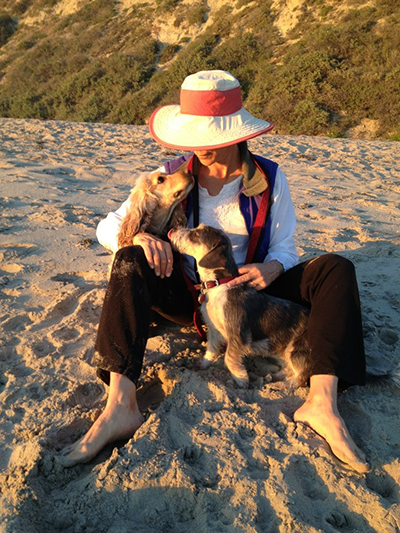
How could Henry have the exact same diagnosis as June? June is much younger and far more active!
Although I somewhat understood her IVDD and back-related issues were the result of the sudden, short impacts caused by constant running, jumping, and playing, I simply didn’t connect the dots to how Henry could also be the victim of the same disease.
What is IVDD?
We soon learned that IVDD, or Intervertebral Disc Disease, is a degenerative disease that affects countless breeds at various ages and activity levels.
It occurs when discs in the spinal column begin to shift so much so that they protrude outward, pressing against the spinal cord and its nerves.
We also learned that there are two types of IVDD and yes, both young and old dogs can have it!
Types of IVDD
Type I
Type I can affect dogs at any age and is mostly seen in (but not limited to) chondrodystrophic dogs, or dogs bred to be shorter and stockier. (Bassett hounds, Corgis, etc.) This type occurs when a dog’s spine experiences a sudden impact that causes the disc to shift out of place.
Type II
This is the type Henry was diagnosed with. It is more gradual but the results are the same: pressure on the spinal cord and its nerves caused by a bulging disc. Type II IVDD affects older dogs between the ages of 8 and 15 by its very nature and isn’t targeted to primarily chondrodystrophic breeds.
IVDD treatment options
For both types, rest, laser light therapy, anti-inflammatories, and even surgery are the common protocol and can aid in helping to manage, if not completely relieve, dog back pain; however, older dogs suffering from Type I are less likely to bounce back as quickly as younger dogs and are more likely to experience continual back problems.
So now I had two very different situations on my hands under the same IVDD umbrella.
Since June’s life with IVDD began when she was only two years old and weighed about eight pounds, I panicked. Was my sweet angel destined to a life of pain and other maladies than can accompany IVDD such as shaking, hunched back, loss of appetite and bladder control?
Why does it happen?
I realized that if June remained still, she wouldn’t injure her back.
But what kind of life is that for a dog? Dogs need to be active. I had to find a way to keep June from twisting her spine and wiggling so much, while she went about her daily business. That’s when the solution hinted at me.
June needed a back brace for dogs, something like what the chiropractor prescribed for me when I had injured my back.
Henry, although older, was also suffering from IVDD related symptoms and needed back stability, firm support, and stress relief as well. So…given this obvious double circumstance, it wasn’t long before the WiggleLess® seed had been planted!
Living with IVDD and the Development of the Brace
Our lives changed forever when June and Henry were diagnosed with IVDD and a big part of my life still revolves around the journey we started when trying to find a way to make their pain go away. Emergency room visits, strong medication and complete crate rest were not what I’d envisioned when we brought our puppies home.

Caring for a dog with IVDD can be tough emotionally.
It was hard for me to watch my pups not be able to play and jump around like ‘normal’ dogs, hear them whimper in pain, and watch them have muscle spasms. No dog mom wants to see their pups not well.
At first I was angry and felt I was confining my tiny rambunctious June to prison, since using a crate became a way of life and she was sentenced to it for an entire month! The thought of her having back surgery or living with doggy wheels if her spine was compromised truly worried me and I immediately began searching the marketplace for canine back support, but found no back brace for dogs.
Dreaming up the solution
With the help of my brilliant seamstress, I started dreaming, sketching, and designing and came up with a brace to support their torsos and lengthy spines.

June wore her dog back brace throughout her recovery from her second back injury and it prevented her from twisting and wiggling. Nursing her through two long back injury recoveries gave me the opportunity to put my skills and life experience to effective use.
I had always felt a special kinship with animals and had been trained in animal massage therapy as well as animal communication. Instinctively I knew my dogs needed more than strong medication and crate rest.
My most important goal for my pups became returning them to a happy, pain free life.
Tips for caring for a dog with IVDD
There is so much helpful advice these days on the web to help you and your little sufferers live a high-quality life with IVDD- the keywords being HIGH-QUALITY LIFE! – here are a few tips I found especially helpful during recovery.
Diet
Maintain your dog’s healthy weight to reduce stress on their backbone and neck.
Food
Moisten kibble or feed them wet food. Chewing can cause stress on the jaw and neck, which can result in pain. The same goes for chew toys or treats. Abstain from these during the recovery period.
Protecting the back
Eliminate stress on back and neck – raise food and water bowls so that your dog doesn’t have to bend down to eat or drink; keep the crate your pup is recovering in at a higher level so that he doesn’t have to raise his head to look at you or his surroundings.
Acupuncture
Acupuncture is particularly good for dogs that respond poorly to or cannot tolerate medication. Surgery may not be an option due to health or finances. Acupuncture may be one option to look into, as it regenerates neurons mobilizing stem cell regrowth.
Laser therapy
Although costly, LT has been proven to reduce tenderness, pain and speed up the tissue healing process.
Back support
After a period of recovery, it is important to keep your dog’s back stable and straight. Wearing a back brace such as WiggleLess® puts less pressure on your dog’s spine and may help him or her to have a more enjoyable and normal life.
Environment
Provide lots of love, comfort, warmth, encouragement, and a peaceful environment. Dogs get stressed out just like us humans do. Stress makes it hard to heal!
Work with your veterinarian
Your veterinarian will determine the best medical protocol for IVDD and your dog.
If your dog is in severe back pain due to IVDD, one or more of the following medications may be prescribed:
Pain medications
Steroids
Steroids are anti-inflammatories and immune system suppressors. They are good especially if given in the vein the first 8 hours or by a shot in the muscle and followed by pills at home. The most commonly used are prednisone and dexamethasone. Accompany with a stomach protector such as Pepcid (famotidine).
NSAIDs
NSAIDs (non-steroidal anti-inflammatory drugs) are anti-inflammatories, and also have pain killing properties too. They must never be mixed with steroids or the NSAID aspirin. The most commonly used are Rimadyl, Deramaxx, Previcox or Metacam. Accompany with a stomach protector such as Pepcid (famotidine).
Muscle relaxants
During a herniation a dog can have nasty muscle spasms. Muscle relaxers help prevent them and they also help keep the dog calm while in crate rest. The most commonly used are Methocarbamol and Valium.
Other pain medications
Pain killers or analgesics help through the healing period by making your dog more comfortable. The most commonly used are Tramadol or a Fentanyl patch.
WiggleLess® back brace
WiggleLess® was created to do one simple thing: HELP DOGS!
There are many wonderful dog lovers out there and I come across amazing parents every day who make my work incredibly rewarding.
Along with our goal to constantly improve our product and find pups in need of support, my team endeavors to provide inspiring stories and a place to connect to other IVDD resources.

June and Henry have both passed on (not from back problems), but they were the inspiration behind my WiggleLess® back brace and I am determined to share what I know and continue to learn with anyone who loves dogs as much as I do.
When I first became acquainted with the disease, there wasn’t the wealth of information out there that we have today. I am amazed each week at the new sites and forums allowing people a space to discuss IVDD and how it has changed their lives and the lives of their dogs. We are now sharing stories of how we can make strides towards wellness and bring relief to our fur babies; which gives me a great sense of reward and satisfaction.

One of my most recent favorite thoughts for the day came from Dodgerslist, a fantastic forum for all things IVDD related.
They reminded readers that “your dog CAN have a great quality of life living with IVDD — no matter whether the dog regains the ability to walk or not. Quality of life is totally a matter of perspective. There is our human perspective; and then, there is the dog’s perspective.”
They suggested, no matter what level of ability your dog achieves after recovery, your dog will be happy and loving life as long as three basic, but very simple requirements are met: food, water, a safe, comfy place to sleep, and a family’s love. I have to agree 100%!
With the right diagnosis and the right treatment, IVDD is manageable, and remembering the simple ingredients it takes to make your dog feel loved and happy is top of the list. My Henry lived well past his IVDD diagnosis, as did June. My pet professional gave me the tools and information I needed to manage my pups’ ailments – and using the brace to help aid their comfort gave me a sense of accomplishment and shared relief!

Today, there are now eight sizes of WiggleLess® dog back braces available, providing comfortable, firm, back support for many breeds and builds of dogs with back problems.
When used as directed, the vet-recommended and patented WiggleLess® dog back brace offers firm support, back stability, and stress relief for your dog. I often smile up with gratitude for Henry and June’s journey, knowing they taught me so much and are now helping me from the heavens to do my small part to make a difference and give support to other dogs.
Related articles:
Canine Intervertebral Disc Disease (IVDD): Prevention, Treatment, and Physical Therapy
Further reading:
About Wiggleless