Beware of Choking Hazards: C.E.T. Oral Hygiene Chews For Dogs CAN Be A Choking Hazard
Dogs need to chew. But just because a dog chew is available for purchase, it doesn’t automatically make it safe.
The bottom line is that your dog can potentially choke on just about anything they put in their mouth. Some items bring a higher risk than others. Danger can lurk anywhere.
There are chews that are officially frowned upon while others are recommended as safe and even useful. It is my experience, though, that even a dental chew you get from your veterinarian can become a choking hazard.
For example, the C.E.T. Enzymatic Oral Hygiene chews are recommended even by Preventive Vet as beneficial. they seem to be clinically proven to help control tartar. I cannot weigh on that but Cookie almost choked on one.
The Preventive Vet does include a note of caution about rawhides.
… some dogs end up with bits of rawhide lodged in their windpipe or stomach, causing choking or digestive obstruction.
Preventive Vet
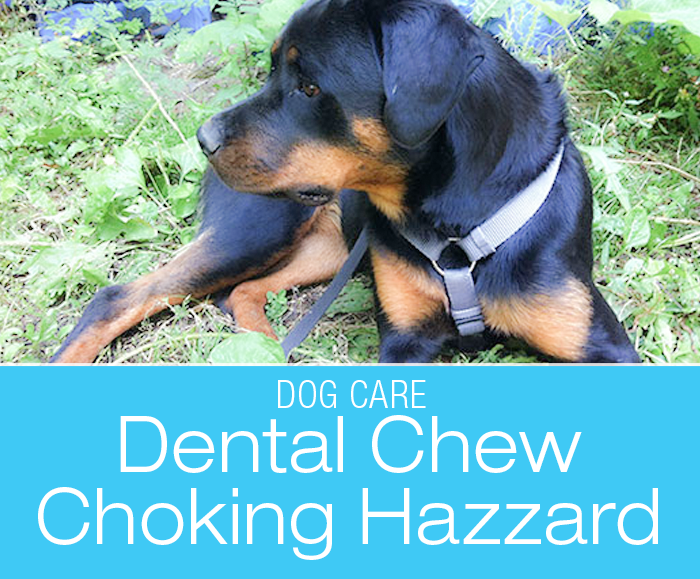
Cookie’s story
We were still working on Cookie getting used to having her teeth brushed, I decided to help maintain her dental with C.E.T. Enzymatic Oral Hygiene Chews for Dogs.
The enzymatic action, together with an abrasive texture is supposed to be effective in helping keep teeth clean when brushing is not possible.
Personally, I am not a fan of any hide chews but I decided to make an exception. The guys like them well enough, so that part was not an issue.
Ignoring my gut concern
One thing I always worried about with any hide type of chews was potential choking or obstruction risk.
I never give any of these things when I’m not monitoring my dogs.
One of the problems with these dental chews is, that even the size meant for large dogs is fairly small. Too small, really, to be able to remove the chew before they get to the end of it. At least for our guys.
Stuck in the throat
Both JD and Cookie got their piece and chewed on it. They finished at about the same time.
Something about Cookie didn’t seem right.
She was making mouth motions as if she got a piece stuck to her teeth somewhere. More importantly, she was panting but in a strange way. Two pants at the time, then she’d stop.
I felt around in her mouth but couldn’t feel anything being stuck in there. But she continued to pant in this strange way.
I decided to explore further back in her mouth, and there it was.
All the way back, there was this long chunk, stuck across. She was unable to either swallow it or spit it out, and as she was breathing it was blocking her windpipe. It was soft and quite stuck in there.
Lucky I was there
Once I found it I got it out quite easily but this could have been a much bigger disaster.
We got lucky this time but I am not willing to take my chances. I am not giving them these chews again.
Fortunately, we are well on our way with the tooth brushing, which is a much safer way of keeping teeth clean.
Did your dog ever have a chew toy incident?
Related articles:
Canine Dental Care: Look at Those Snappers, Will You?
Is Choking an Emergency?
Reverse Sneezing in Dogs: Is My Dog Choking?
Further reading:
Popular Dog Chews That Are Actually Dangerous to Dogs