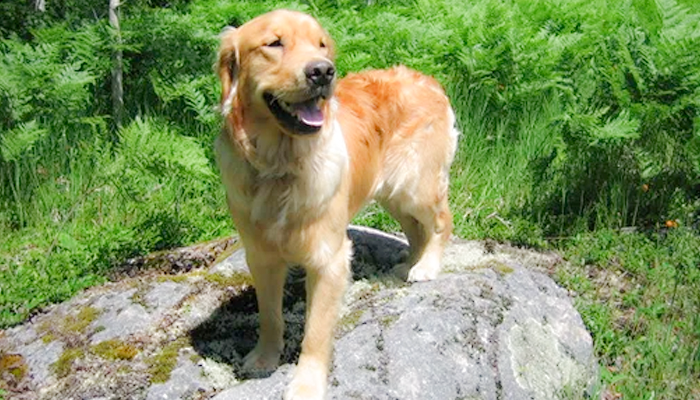
Atypical Seizures in a Dog: Canyon’s Story
Atypical seizures describe episodic focal motor events.
Canyon’s episodes were nothing if not strange. Thank you, Brook, for sharing Canyon’s story.
Canyon’s story
Our dogs had their annual check-ups with Dr. B.
Canyon was first. He had two years of good titers, so Bianca said we could skip them this year. She then asked us if we have any concerns and we told her about the episodes Canyon has been having.
After 3 years we finally figured out, it is not a leg cramp like we had originally thought.
It took us 3 years to figure out what was happening because it is not a typical kind of seizure.
Canyon’s first episodes
The episodes started in October of 2011.
We had recently come in from a long game of fetch. While Canyon was chilling on the kitchen floor, he started to flip out as if he was in pain. After struggling to restrain him, it seemed that something was up with his left hind leg.
He was able to move everything else, and he was totally aware of what was going on. However, he couldn’t extend his left hip. It lasted only minutes and didn’t occur again until the following October, when they happened twice, about three weeks apart.
Dr. Bianca couldn’t make a definitive diagnosis because the symptoms, the frequency, and the after-effects were odd.
Other than some increased clinginess beforehand, a slight increase in drooling, some muscle twitching and a release of his anal glands, Canyon is completely normal during and after the seizure.
It lasts about 5 minutes from start to when he gets up and grabs his toy to parade around again. He doesn’t lose consciousness, he isn’t incontinent and the muscle twitches only seem to impact his back end. It took a while for us to figure it out.
Episodes become more frequent
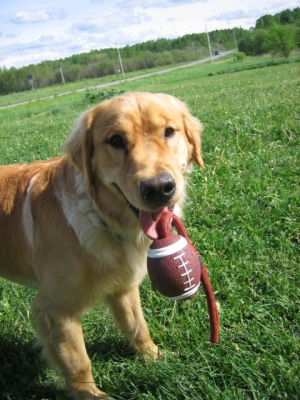
Last fall Canyon had another episode, and then at the end of February, the end of March and then about a week ago, he had them.
Since they seem to be happening more often, we’ve finally figured out what they are.
Partial seizures
We did some research on seizures and it looks as though Canyon is having partial seizures.
Bianca feels as though we are doing everything we can at the moment. She is going to retest his thyroid levels in November. She said the results were on the low side of normal and that hypothyroidism can cause seizures. But that for now, we’ll just monitor things.
Since we did note that he had had fish within 24 hours before having at least two of the seizures, Bianca has instructed us to eliminate all fish, except his Omega 3 supplement, from his diet. The only other thing we can pinpoint as a possible trigger is anxiety and/or stress, so we’re going to try to limit that, but of course, it will be impossible to totally avoid.
We are a bit worried about this diagnosis because, from our research, it looks as though it is common for partial seizures to worsen and become grand mal seizures.
Bianca doesn’t want to start Canyon on medication yet, and we agree, because the medications cause liver damage, he’s not quite 5 and the seizures aren’t too severe, we all feel it’s better to wait.
Related articles:
Seizures or Convulsions in Dogs: What Can Seizures Look Like and What Can Cause Them?
Can Dog Food Cause Seizures?
Further reading:
Canine Seizures