Unexplained Vomiting in Dogs: The Story Of Flossy And The Mystery Vomiting
Vomiting is often caused by a problem in the GI tract itself. But the issue might be originating somewhere else altogether.
Figuring out what is making your dog throw up is essential to a successful treatment. Do you think that diagnosing vomiting is simple? Think again.
Potential causes of vomiting include:
Causes within the GI tract
- dietary indiscretion
- food intolerance/food allergies
- parasites (roundworms, hookworms, Giardia, coccidia, etc.)
- viral infections
- bacterial infections
- foreign bodies
- intestinal obstruction
- intussusception
- tumors/growths in the GI tract
Systemic causes
- kidney disease/kidney failure
- liver disease/liver failure
- pancreatitis
- pyometra
- diabetes mellitus
- Addison’s disease
- toxins/poisons
Further reading: Causes of Vomiting in Dogs: Why Is My Dog Throwing Up?
Thank you, Deborah Campbell, for sharing Flossy’s story.
Flossy’s story
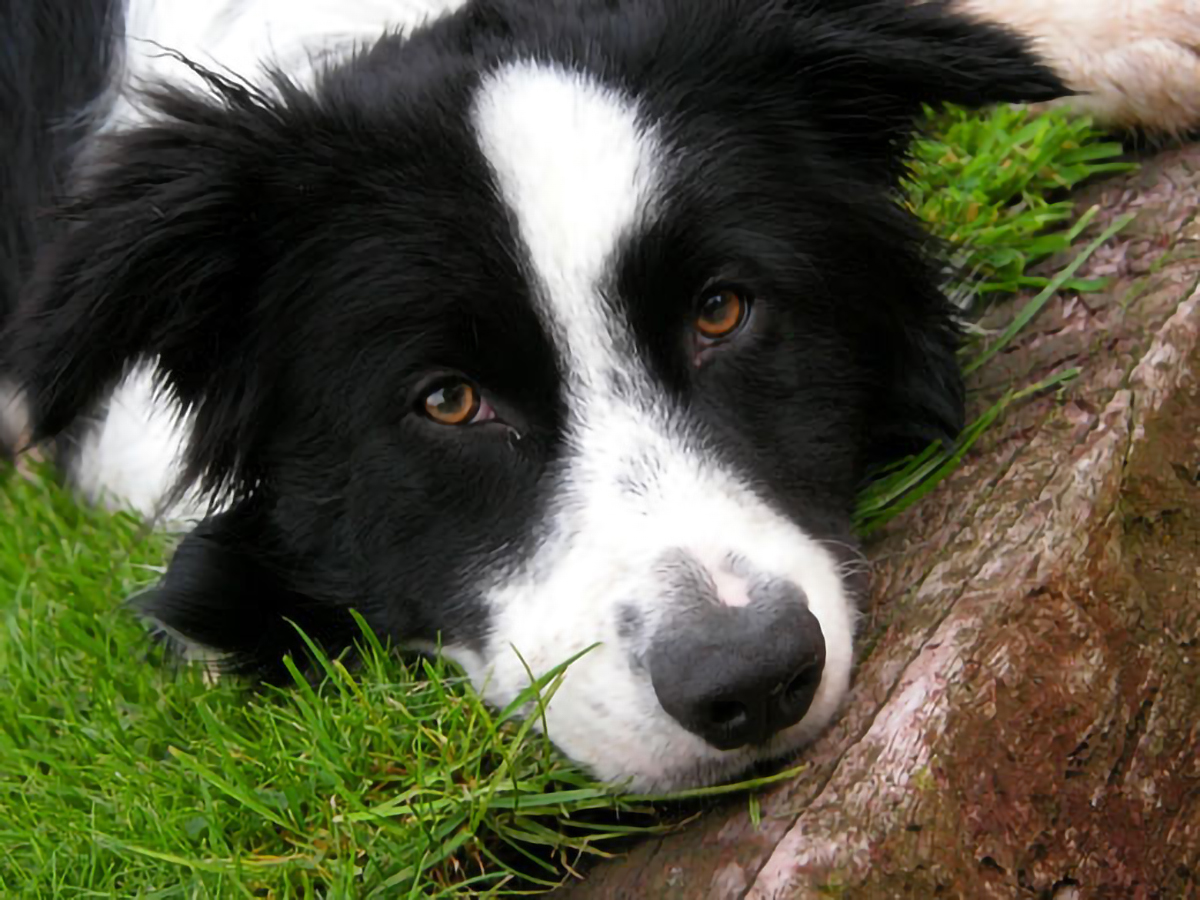
It all started one morning when my husband gave Flossy, our 2-year-old border collie, a small piece of toast.
No sooner had it been swallowed, she has brought it back up. No retching, just straight up. She was lying on her bed during the night, and the poor love didn’t even have time to stand up. She was sick on her bed—mostly water.
I looked at the calendar and worked out that it was 3 months since the end of her season. Therefore, I put it down to the beginnings of a phantom pregnancy. After all, Flossy had been a little unwell last time (going out to eat grass and be sick). I took her to the vets, who prescribed special food, antibiotics, probiotics, and monitoring her.
So, it went on for a few days, being sick, usually water, during the night and in the morning.
Pyometra concern
I then started getting worried about possible pyometra because she also had a clear discharge from her lady bits. But I had been giving her raspberry leaf tablets for the duration of her season. Beyond, she was young and fit and ate raw.
How could this be?
I was on the way to meet a friend, and Flossy was sick in the car again—just water. At first, I thought it was the movement of the car and her hormones again. But I needed to know for sure. So I made an emergency appointment at the vet, where they undertook an ultrasound on her. The ultrasound showed nothing. The vet thought she saw something but could not then find it again to mark it. Flossy’s blood results were all normal. So we went away with the advice to wait for the hormones to settle.
Weight loss
The sickness continued and Flossy was losing weight.
She would keep food down. However, I heard water sloshing around in her stomach after she drank. She’d become nervous about drinking because a short while afterward, it would come back up again.
Meanwhile, she went through all the normal signs of a phantom pregnancy – collecting toys, nesting, and whining. I really wanted to press the vet for an x-ray but didn’t. So about 2 and a half weeks went by.
Eventually, Flossy wasn’t actually sick—the water just poured out her mouth by this stage. I became convinced she had a megaesophagus. I made an appointment at the vets (again).
X-rays
This time, I pressed for an x-ray and I left her there, fearing the worse.
The vet was amazed when he called. He said her x-ray showed a round ball about 2 inches in diameter, clearly visible in her stomach.
I could not believe what I was hearing.
Now, looking back, I know exactly what had happened. Flossy likes to grab toys and wrench them around in her mouth as our other dog is playing. She must have picked up my husband’s squash ball and swallowed it as it became slippery with saliva.
The vet said that Flossy did not show the typical signs of a gastric obstruction—nobody suspected that.
The decisions
There would have been no way she could have brought that ball up or for it to pass. It was acting like a valve in her stomach—total vet visits: 3.
I had two choices:
- The vet could remove the ball asap by opening her up, or
- I could contact the local specialist vets who carry out the endoscopic removal of foreign objects. £800 v £1600 approximately.
The specialist practice wasn’t overly helpful—mostly due to an unhelpful receptionist and the fact that they stated this type of obstruction was not an emergency, and I had to wait for 4 days. I was advised by the normal vet that the risk of removing a ball endoscopically was that it could get stuck in the esophagus – a much more serious condition.
The surgery
I decided to have the surgery the following day because, by the time I had gained approval for the specialist to talk to me (through referral), the time had been lost, and the vet had to go back into his afternoon consulting.
The squash ball had roughened and the yellow dots had almost worn away.
I have no idea how long it had been there before causing her an issue. Not long, I hope. I worried about the chemicals used in the production of the ball. Interestingly, days previously, when I thought the problem was hormone-related, I had my friend over to do a zoopharmacognosy session (a process by which animals self-medicate by selecting and using plants, soils, and insects) with her. She ate loads and loads of spirulina—was this her way of trying to deal with the ball in her system?
The incision was long and the operation is a large one and Flossy had to do lead walks and rest for 10 days.
I was concerned that the flesh in her stitches had popped outwards and I took her back to the vet to check (free of charge)
She was healing well and the vet was pleased.
I have now removed any ball from being freely available. I feel so bad that Flossy had to go through this, completely our fault – and all along we were concentrating on the wrong cause.
Only the x-ray solved the mystery and, with the beauty of hindsight, I should have pressed for an x-ray earlier.
Related articles:
My Dog’s Vomiting
Further reading:
Dog Vomiting: When Should You Be Concerned?