
Paw Preference in Dogs: Is Your Dog Left- Or Right-Pawed? How to Test and Impact on Personality and Health
Is your dog left- or right-pawed, or ambidextrous? Why would you want to know, other than that it is fun to find out?
Do you know there is a potential relationship between paw preference in dogs and their immune function? One study measured the relationship between left- or right-pawedness and the number of immune cells. It returned some interesting results suggesting that brain asymmetry influences immune response in dogs.
For example, paw preference might predict your dog’s levels of:
- specific antibodies (IgG)
- interleukin-10
- interferon-gamma
In the study, all dogs received the rabies vaccine, and the researchers evaluated the immune response to the shot. Left-pawed dogs had lower rabies antibodies—a weaker immune response to the vaccination than right-pawed or ambidextrous dogs.
Further reading: Paw Preference in Dogs: Relations between Lateralised Behaviour and Immunity

Right-pawed dogs may be more optimistic but show different emotional/immune profiles. Owner handedness can influence it too—left-handed owners may have more left-pawed dogs.
Paw preference correlates with overall well-being—left-pawed dogs might have enhanced immune function for better disease resistance, while ambidextrous ones could be more adaptable but prone to anxiety. Use this for personalized care, like calmer environments for cautious left-pawers.
Some interesting data related to paw preference
- There is about 18% left-pawed dogs and they are more likely to be male
- Left-pawed dogs have a weaker immune system response compared to right-pawed or ambidextrous dogs.
- There is about 57% of right-pawed dogs and right-pawedness is more common in female dogs
- Ambidextrous dogs (25% of the population) show no sex bias.
- Ambidextrous dogs are much more likely to exhibit noise, thunderstorm phobia, and separation anxiety than their left or right-handed cousins.
Knowing your dog’s paw preference can help prevent or mitigate specific issues presented above.
Determining your dog’s paw preference
How do you find out your dog’s preference?
You will need:
- Some soft dog food – your dog’s regular brand is less likely to cause a stomach upset than anything else.
- A Kong® (or similar) toy.
- A sheet of paper numbered from 1 to 50.
- A pencil.
- Plenty of time. This test can take up to four hours.
The test:
- Pack the Kong® with food, and freeze it solid. To start the test place it in front and to the center of your dog’s paws.
- Record the paw used to first touch the Kong® at number 1 on the recording sheet.
- Continue to record the paw used to touch the Kong® until the dog has made 50 paw interactions. ClassifyFind definitions below. Find definitions below. Don’t count interactions with both paws placed separately on the Kong® at the same time.
- Don’t record if the dog repositions their paw or paws on the Kong®, without the paw or paws completely leaving the Kong®.
- If the dog holds the Kong® down with a certain paw or with both paws for longer than 10 seconds, gently move the Kong® and place it in front and to the center of your dog’s paws.
- Some dogs retrieve only the top layer of food from Kong®. For these dogs, the Kong® you need to top up with food to achieve the 50 paw interactions. Large hungry dogs empty the Kong® quickly so they are the most likely to need it topped up.
| Left paw (L) | Right paw (R) |
| – Left paw on Kong®, right paw not. – Left paw over right paw on Kong®. – Left paw on top of Kong®, right paw underneath. | – Right paw on Kong®, left paw not. – Right paw over left paw on Kong®. – Right paw on top of Kong®, left paw underneath. |
 |
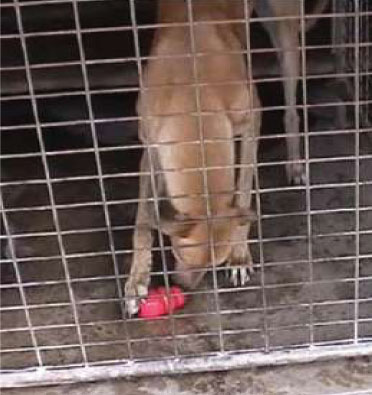 |
| Greyhound demonstrating classification of paw interactions with Kong.– left paw interaction (L) | Greyhound demonstrating classification of paw interactions with Kong.- right paw interaction (R) |
Interpretation of results
After recording 50 interactions, you have sufficient data to determine your dog’s preference. Dogs that use either of their paws 32 times or more are left- or right-pawed. Less than 32 uses of either paw indicate an ambidextrous dog.
Research reviewed to compile this document:
Lateralized behavior in the domestic dog, Canis familiaris; Behav Processes. 2003 Feb 28;61(1-2):27-35.
Paw preference in dogs: relations between lateralized behavior and immunity; Behav Brain Res. 2004 Aug 31;153(2):521-5.
The relationship between paw preference strength and noise phobia in Canis familiaris; J Comp Psychol. 2006 Aug;120(3):176-83.
Findings from the largest related study to date
The latest study published in the journal Applied Animal Behavior Science aimed to determine the breakdown of paw preference in dogs. The summary results concluded that:
- most dogs have right or left preference
- most dogs are right-pawed
- male dogs are more likely to be left-pawed
The researchers analyzed data collected from an owner survey, evaluating response in 17,901 dogs.
- 74% of dogs showed a clear paw preference
- 26% of dos used both paws equally
- 58.3% of dogs with clear preference were right-pawed
According to the results, dogs are more likely to prefer left paw than humans.
- 60.7% of female dogs had right paw preference
- 56.1% of male dogs were right-pawed
Further information: The effect of sex and age on paw use within a large sample of dogs (Canis familiaris)
Breed Specific Notes
Working breeds (e.g., Border Collies) often show strong preferences from tasks, potentially linking to immune resilience in high-stress roles. Toy breeds may vary less, but genetics play a part—test yours to spot health patterns.
Paw Preference in Dogs FAQ
Yes, 50-70% show a preference (left/right), like human handedness—tied to brain asymmetry.
Use the Kong test: Stuff a toy; note first paw over 50-100 tries—consistent side indicates dominance.
Left-pawed dogs may have stronger immune responses (higher antibodies), aiding stress recovery—2025 studies link it to better resilience.
Ambidextrous dogs (no preference) are common and adaptable, but may show higher anxiety—monitor behavior.
Both—puppies exhibit early bias, but environment (e.g., owner handedness) shapes it.
Yes, train to their strong side for efficiency; left-pawed may need extra calm for immune-linked stress sensitivity.
Related articles:
Canine Immune System: Spleen – Why Does The Spleen Get No Respect?
Further reading:
Dogs With Left Paw Preferences May Be Different Emotionally
Paw Preference in Dogs: Relations between Lateralised Behaviour and Immunity