
New Treatment for Canine Atopy: Cytopoint–Veterinary Highlights
Atopy, or atopic dermatitis, is the equivalent of human hay fever.
But dogs don’t get a runny nose and sneezes, they get itchy skin. Very itchy skin. So itchy they are willing to scratch the flesh right off themselves.
There are many potential treatment options but they don’t always do much to help the poor suffering dog. Immunotherapy is the one that makes the most sense to me. Why not work with the immune system instead of suppressing it? It takes a while to take effect, though–what if your dog needs some serious relief now?
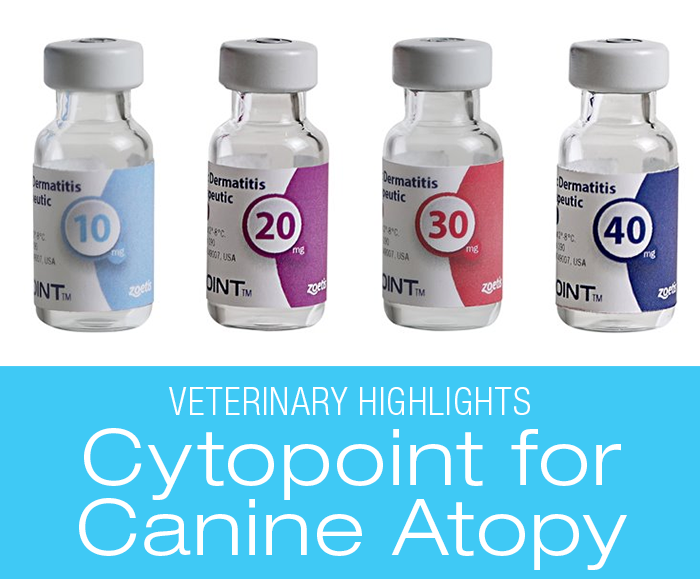
Then there came Apoquel. It generated a lot of excitement but the long-term satisfaction has been mixed. Cytopoint has just been licensed for the treatment of canine allergic dermatitis.
What I like about it is that it uses monoclonal antibodies targeting the key protein involved in triggering itch. Antibodies are something normally found in the body and they are very targeted.
One injection is supposed to provide itch relief for up to eight weeks. That all sounds pretty good. According to studies, it seems to do a good job to stop the itchy feeling. Side effects as known so far had been relatively rare.
What is the difference between Atopica, Apoquel, and Cytopoint?
Atopica
- immunomodulatory drug
- inhibit immune reaction to an allergen
- immune suppression
- daily pill
- relief in 5 – 7 days
Apoquel
- inhibits nerve response
- suppresses itching
- designed for acute flare-ups
- daily pill
- relief in 24 hours
Cytopoint
- an antibody that blocks signal in the nerves
- relieves chronic itchiness
- decreases itching
- monthly injection
- relief in 24 hours
Source: Animal Skin and Allergy Clinic
Personally, I lean toward a long-term solution such as immunotherapy which re-educates the immune system as opposed to suppressing it. But in a bind, if I was looking for relief before that becomes effective, Id consider Cytopoint.
The good news is that there are options. The bad news is that if any of them was so awesome, we wouldn’t need the rest of them.
Source article:
Cytopoint Now Approved to Treat Canine Allergic Dermatitis
Further reading:
Differences Between Atopica, Apoquel, and Cytopoint