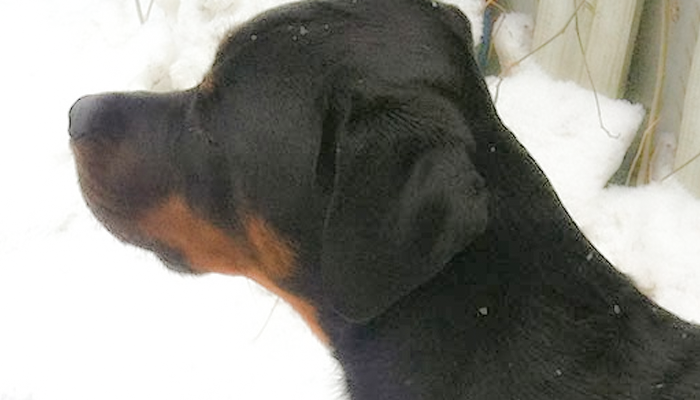
Lymph Node Enlargement in a Dog: Is Cookie Going To Be Another Medical Challenge Or Are We Looking Too Closely?
Enlarged lymph nodes can be a scary finding.
Lymph nodes are small nodules within the lymphatic system that play a role in the function of the immune system. Their function includes:
- filtration of the lymph fluid
- trapping infectious agents such as viruses and bacteria
The most common cause of lymph node enlargement is an infection. It can, however, be due to cancer as well.

Cookie’s story
Cookie just got over her hind leg lameness.
She finished her series of ten underwater treadmill sessions, and we took her to the primary vet for evaluation to see what will be our next steps. She seemed to be doing well, it’s been a while I’ve seen her favor the leg. She wasn’t limping even after her weekend farm visits, though I’m still on pins and needles. I suppose I’m going to be that way for a while now.
According to the evaluation, the legs are doing well.
Her primary vet couldn’t identify any painful areas and the muscle size is almost back to symmetrical. Seems the therapy worked well.
The swelling on her left ankle is still there and requires further topical treatment but that one never seemed to bother Cookie at all. It is a low movement joint and the injury doesn’t really interfere with function.
Cookie’s ears also looked good with a regiment of weekly cleaning only.
That’s the good news.
Enlarged lymph nodes
However, during the check-up, her submandibular nodes were enlarged. Not the words I like to hear.
Cookie isn’t acting sick, but it certainly gives me something else to worry about. An examination of the mouth didn’t reveal any issues. Our vet feels it’s the immune system’s reaction to some irritation and might resolve on its own.
It is true that on Friday I had her veterinary chiropractor check them also and she said that one felt a normal size and one just a tiny bit enlarged. To her, they were returning to normal from whatever made them angry. I certainly hope so. Meanwhile, I’m watching Cookie like a hawk.
Unless something else happens in the meantime, her vet wants to see her for re-check at the end of the month. Fortunately, that’s is going to be next week.
Why am I so worried about the nodes?
Jasmine had them very enlarged once, so much so that it was making her cough. According to Jasmine’s vet at the time it was a toss-up between infection and lymphoma. We started antibiotics and, fortunately, the problem resolved and never came back. However, Jasmine also had a fever, Cookie does not.
The most likely reasons for these nodes to be enlarged is a regional infection or neoplasia. That’s one of the words I’d like to erase from the dictionary right there. An infection could be in the mouth or in the ears, which both seemed to check out fine. Lymphoma or melanosarcoma are things I don’t want to think about.
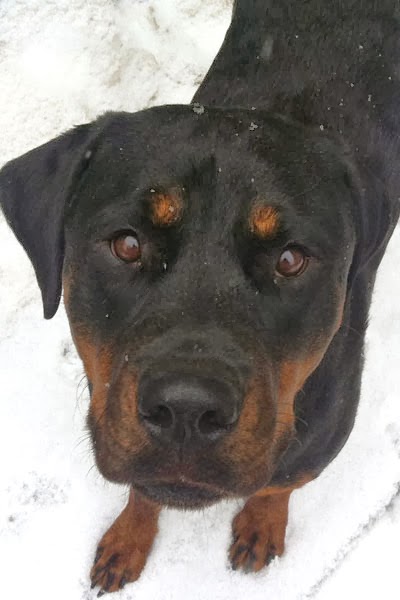
Really hoping that on the next check-up the nodes will be back to normal and remain that way.
Cookie’s primary vet doesn’t seem overly worried, so there is some comfort in that. That doesn’t mean that it’s not going to sit on my brain until I hear that the nodes are normal. Are they trying to kill me?
I never said those words out loud, even though I was thinking it. My dear friend Dr. Krista did. “If they’re not worried, they shouldn’t have even told you and just put it in the notes.”
I concur. That is one downside of online medical records, though. Even if they just put it in the notes, I’d still see it there anyway. Might as well just discuss it with me.
Am I a jinx for the girls I love?
Let’s see … Cookie has been with us for five months now.
She already had a mysterious lameness which turned out to be a porcupine quill in her foot that she brought along from her previous life.
She almost choked on a dental chew, and she managed to find outside and swallow what could potentially have been a pot brownie. She had an ear infection. Then she injured the leg. And now the damn nodes …
Maybe we’re just looking too closely?
Maybe it’s just the downside of looking so closely. The harder one looks, the more stuff they find. Maybe, if she weren’t at the vet’s to evaluate the progress of the leg injury, nobody would know about the nodes and life would go on.
Well, it is what it is. For now, I have something else to mess with my sleep.
Related articles:
Swelling (Edema) in Dogs
Assessing Dog Symptoms: What Is The Right Level Of Paranoia When It Comes To Your Dog’s Symptoms?
Further reading:
Lymph Node Inflammation (Lymphadenopathy) in Dogs