
Diagnosing IBD in Dogs: New Way to Diagnose Canine Inflammatory Bowel Disease (IBD)?
Inflammatory bowel disease in dogs is as nasty as it is difficult to diagnose conclusively.
Often, the diagnosis is made by eliminating other issues. That’s because the only way to properly diagnose it is by biopsy of the gut. Which means getting in there and grabbing a chunk. That is about as far from non-invasive as it gets. And it’s an imperfect method even at that.
That’s why scientists were looking for a better way to diagnose IBD in dogs.
What is inflammatory bowel disease?
Inflammatory bowel disease is a medical term that describes chronic inflammation of the gastrointestinal tract. That part is self-explanatory.
What is causing the constant state of inflammation, though? IBD is the result of the breakdown or malfunction of intestinal immunity. The immune system becomes over-stimulated which leads to all that inflammation.
The inflammation further damages the gut defense mechanisms and it becomes a self-perpetuating cycle.
It appears that the condition is auto-immune in nature.
What is gut flora?
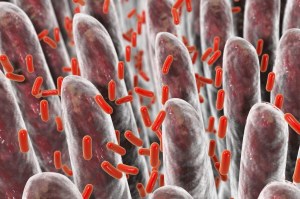
The gut is the largest immune organ. It hosts trillions of bacteria. In a healthy gut, these bacteria are friendly and helpful. Here are some of the functions the gut flora perform:
- food digestion and absorption
- interaction with the immune system
- B vitamins synthesis
- break down of bile acids
- keeping infective bacteria at bay
It has been found that the composition of gut flora may play a role in IBD.
Researchers at the University of California analyzed fecal samples from dogs with and without the disease. They discovered there is a pattern of microbes indicative of IBD.
Does the disease change the gut flora or do changes in gut flora cause the inflammatory disease?
It is not clear which is the cause and which is the effect. But knowing that the state of the gut flora reflects gut health is all you would need for a diagnosis.
Based on the findings, the research team was able to predict which dogs had IBD and which didn’t with 90 percent accuracy.
This might potentially lead to a new way of diagnosing IBD in dogs. Which would be absolutely fantastic.
Source article:
Dog poop microbiome predicts canine inflammatory bowel disease
Related articles:
Why I Dislike Inflammatory Bowel Disease (IBD)