
Canine Hematuria: Blood in Urine. Why Is There Blood in My Dog’s Pee? Causes, Symptoms, and When to See a Vet
By now, it should be your mantra—blood doesn’t belong outside the blood vessels. Urine is no exception.
There should never be any visible blood in your dog’s pee.

Frank blood
When you see blood and recognize it as such, it is referred to as frank blood. In other words, it is the blood that is fresh, bright red, and looks like blood. The longer blood spends outside the bloodstream, the darker it gets. It can turn brown, even black.
All your dog’s blood passes through the kidneys. That’s where waste and excess fluid get filtered out. Then, the filtered blood goes back into the bloodstream while the waste, in the form of urine, is eliminated. When everything is functioning normally, the kidneys are designed in such a way, so that blood cells don’t make it through.
How does fresh blood get in the urine?
The two major scenarios that can result in blood in the urine are diseases that lead to damage of tissues in the urinary tract or conditions that cause abnormal bleeding.
Any condition that messes with normal clotting can result in bleeding anywhere in the body, including the urinary tract.
The potential reasons behind abnormal clotting are toxicity, infections, or auto-immune disease. In addition, inflammation of the blood vessels (vasculitis) can cause blood vessels to be unable to contain the circulating blood.
Potential causes of canine hematuria
The most common cause is blood leaking into the urinary tract due to tissue damage.
Number one suspects are a urinary tract infection (UTI) or urinary tract stones. The damage from urinary tract stones seems self-explanatory. But how does an infection cause bleeding? The presence of bacteria triggers an immune response that triggers inflammation, allowing blood to leak from vessels.
Trauma, inflammation caused by things other than infection, or cancer too can cause bleeding into the urinary tract. This is not a complete list of potential causes. But it illustrates the importance of recognizing that blood in your dog’s urine is a serious symptom.
Summary of causes of hematuria in dogs
The complete list of potential problems that can lead to blood in your dog’s urine include:
- urinary tract infection (UTI)
- urinary tract stones
- kidney disease/failure
- poisoning
- prostate issues in male dogs
- heat in female dogs
- recent surgery
- trauma
- cancer
- clotting disorders
Further reading: Blood In Your Dog’s Urine? Here’s What To Do
Other symptoms
The most likely other changes you might notice include increased frequency of urination (not increased volume) and straining.
Depending on the cause, other accompanying signs you may notice include:
- urinary accidents
- increased thirst
- cloudy urine
- licking of the genitals
- restlessness
- lethargy
- weakness
- fever
- loss of appetite
- vomiting
- changes in stools
- pale gums
- bad breath
- and more
When is Blood in Urine an Emergency?

Blood in a dog’s urine, known as hematuria, is always a red flag and should never be ignored. However, whether it’s an immediate emergency depends on accompanying symptoms and severity.
Seek emergency veterinary care right away if blood in the urine occurs with any of these signs, as they could indicate life-threatening conditions like blockages, severe infections, or organ failure:
Inability to urinate or severe straining
Straining to urinate or inability to pee could mean a urinary blockage (common in males from stones or prostate issues), risking bladder rupture or kidney damage.
Pain or distress while urinating
Crying, whining, or hunching suggests intense discomfort from UTIs, stones, or trauma.
Lethargy, weakness, vomiting, or collapse
Points to systemic issues like poisoning (e.g., rat bait causing clotting problems), heatstroke, or hemolytic anemia.
Pale gums, rapid breathing, or abdominal swelling
Signs of internal bleeding, shock, or organ involvement (e.g., liver/kidney failure).Large amounts of blood or clots: Frank hematuria (visible red urine) often requires immediate intervention, especially if sudden.
Worried about the appearance of your dog’s urine?

Try our FREE Is This and Emergency? Symptom Checker tool to expand on details like color and accompanying signs for a quick urgency assessment and vet recommendations.
Canine Hematuria Breed-Specific Notes
Breeds Prone to Developing Stones
(e.g., Dalmatians, Bulldogs, Schnauzers)
Genetic predisposition to urinary crystals/stones causing blood from irritation/blockage. Monitor diet (low-purine foods) and urine pH.
Male Dogs
(e.g., Labrador Retrievers, German Shepherds)
Prostate issues like hyperplasia or cancer common in intact seniors, leading to bloody urine—consider neutering and regular exams.
Female Dogs During Heat
(e.g., unspayed of any breed)
Vaginal discharge can mimic hematuria; true blood may signal infection—spay to prevent cycles/complications.
Small Breeds/Senior Dogs
(e.g., Chihuahuas, Yorkies)
Prone to UTIs/kidney disease escalating to hematuria faster due to size/age—watch for straining/thirst.
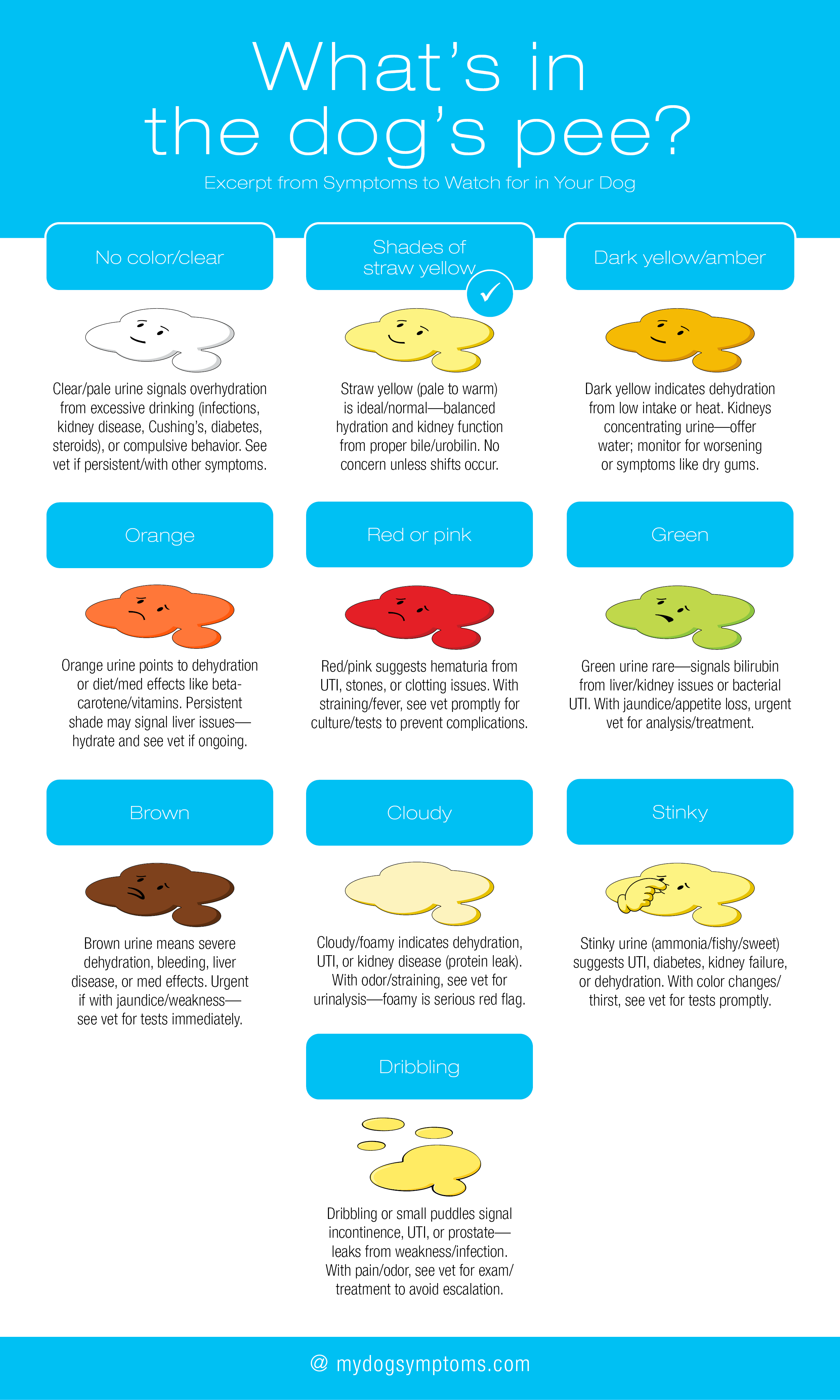
Hematuria in Dogs FAQ
Tissue damage from UTIs, stones, trauma, or inflammation; or clotting disorders from poisoning, infections, or auto-immune issues like vasculitis. Always serious—see causes section.
Fresh blood is bright red (frank hematuria); if cloudy/red-tinged, collect a sample for vet urinalysis to confirm vs. sediment/pigment.
Yes, if accompanied with straining, lethargy, vomiting, or pale gums.
Common from trauma/catheter; monitor for infection—vet follow-up essential if persistent.
Hematuria is whole blood cells (clots visible); hemoglobinuria is from RBC breakdown (brown/red without cells)—both emergencies, diagnosed via urinalysis (link to our guide).
Related articles:
What’s In The Urine?
Is Inability to Urinate an Emergency?
Brown Urine in Dogs: Why Is My Dog’s Pee Dark/Brown? Causes, Symptoms, and Is It an Emergency
A Primer on Canine Bladder Cancer
A Primer On Prostate Issues
Further reading:
Blood in the Urine in Dogs
Blood In Your Dog’s Urine? Here’s What To Do
I love how thorough you were with the possible causes of blood in the urine. I feel like most people only think of urinary conditions. But sometimes it’s actually not the primary issue, and dog will not even show signs of straining to urinate. I know in our veterinary clinic we saw a dog for an orthopedic concern (hind limb lameness), but actually ended up finding blood on the floor of the exam room. A few diagnostics later – we found a large prostate mass!
Always important info Jada. I’ll be sharing this over on my Pinterest board. I am familiar with UTIs with my one girl as she aged. So important to keep an eye on these things.
I appreciate your list of causes and symptoms. People hate wading through words and more words to find what might be causing their dog’s issue. Lists are the best, you check, you see what might be wrong, and you head to the vet.
This is great information about blood in urine. It reminded me of one of my favorite horses. I got a call at work that he was sick. I suspected colic and raced home while the mobile vet was called. When I got there he was pacing. Then he looked at me and peed, which was all blood. He gently laid down and was gone.
A few years prior to that he had a HUGE calcified stone in his poop about the size of a softball. He was sick for about 10 days prior to that softball appearing. A very scary 10 days! After that he’d pop out little quarter sized calcified stones in his poop every so often. The vet carried the softball stone around as show and tell for years. She was always perplexed how Hank got such stones because they don’t happen with Nevada horses and he was a native Nevada horse. Apparently, they are common with California horses.
This article really made me think of my Hank and how he much have suffered more than we even knew. We ran every test available at the time. Apparently, he waited to see me before going. Such a sweet boy.
I’m so glad to know what to look and what could be the cause of blood in the urine. I’m sharing this with all my pet parents.
Great information and pet parents should know about this to understand the symptoms
This is such important information! Anytime we see something concerning like blood in our dog’s urine, it can lead to panic and concern. But, recognizing what it COULD mean and how to proceed can make a significant difference in how quickly your dog is able to get the help it needs. Thank you for sharing this!
Very informative. My dogs have had UTIs before, but never blood in their urine, at least that I could see. I do make sure to look at their urine when they go, just in case. This is a good reminder that it’s important to keep an eye on your dog’s…output…for signs of anything abnormal.