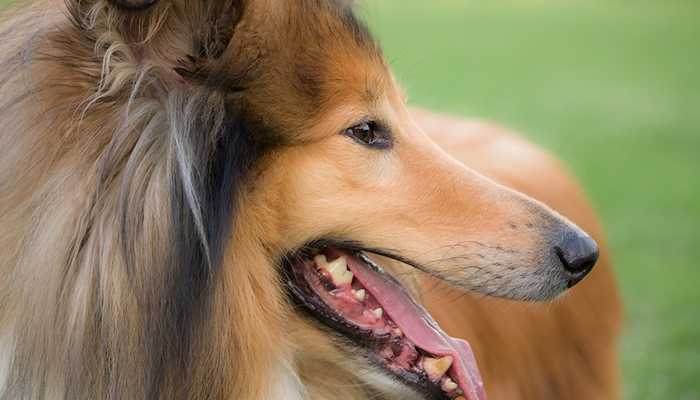
Canine Collie Nose: Discoid Lupus Erythematosus (DLE) In Dogs
In spite of its name, the canine collie nose is not limited to Collies.

What is lupus?
Lupus is an autoimmune disease, which means that a dog’s immune system attacks their own tissues.
There are two types of lupus in dogs: systemic and discoid.
Systemic lupus erythematosus (SLE) is fortunately relatively rare in dogs. The immune system of dogs suffering from SLE attacks various tissues in the body. This includes the kidneys, skin, heart, lungs, nervous system, blood, and/or joints. It is a chronic and often fatal disease.
Discoid Lupus Erythematosus (DLE) is a form of the same disease, but its impact is local rather than systemic.

Localized condition
SLE and DLE can have similar skin symptoms. However, DLE only affects the skin. The lesions are typically limited to the face and nose. However, other diseases can also cause similar skin problems. A definite diagnosis requires a biopsy.
Affected breeds
Breeds most commonly affected by discoid lupus are Collies, German Shepherds, Huskies, Shetland Sheepdogs, Brittany Spaniels, and German Shorthaired Pointers. A genetic predisposition towards developing DLE is thought to be responsible for the increased incidence in these breeds.
Canine collie nose symptoms
The first signs usually include:
- a loss of pigmentation around a dog’s nose
- abnormal smoothness to the texture of the nose
In more advanced cases, y red and flaky skin, ulceration of the skin, open sores, and crusts can develop. Affected areas most frequently include the nose, lips, ears, the skin around the eyes, and sometimes the genital region. All of these body parts are sparsely covered with fur and exposed to sunlight.
Prevention
Ultraviolet rays aggravate Collie nose.
Therefore, it is most likely for the disease to develop in dogs that live at high altitudes. Flare-ups are most likely during times of high sun exposure such as:
- during the summer
- or with the increased glare off of a persistent snowpack
Often, keeping the dog out of direct sunlight is all that is needed. Sunscreen protection is also helpful (use sunscreens made specifically for dogs. The Zinc Oxide that is included in many human sunscreens can be toxic to dogs if they lick it off). Supplements with anti-inflammatory action, such as omega-3 or vitamin E can also help.
Consult your veterinarian before using any supplements.
Treatment
Immunosuppressive drugs, such as corticosteroids, are also commonly used to treat DLE. Topical therapy may be sufficient. Topical treatment significantly reduces the chances of unwanted side effects developing. However, in severe cases, systemic treatment and close monitoring for side effects may become necessary. Before reaching for any of these drugs, I would definitely want to consult a TCVM (Traditional Chinese Veterinary Medicine) or holistic veterinarian for alternative options first.
In rare cases, dogs with DLE have developed a type of skin cancer, squamous cell carcinoma, at the site of their skin lesions. It is likely that the increased tendency towards developing a sunburn (because of the loss of protective pigments) and chronic inflammation of these areas is to blame.
Related articles:
Alternative Treatment Options for Discoid Lupus (DLE) in Dogs
Further reading:
Discoid Lupus Erythematosus (DLE) in Dogs