
Coffee Grounds in a Dog’s Vomit: What Is That Dark Grit in My Dog’s Vomit?
When you hear blood in vomit, you probably imagine bright red streaks. But blood doesn’t always look like that. With exposure to stomach acid, it turns dark, grainy, and clumpy—in your dog’s vomit, it will look exactly like used coffee grounds.
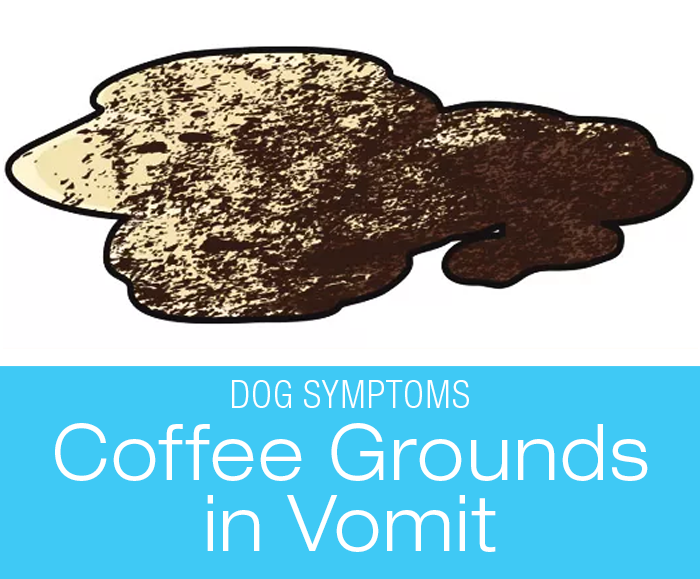
Could it be actual coffee grounds?
Couldn’t a dog get into the garbage and eat some actual coffee grounds?
Everything is possible, particularly with dogs—they can get into anything. If that were the case, you should be able to find evidence of that quite easily—spilled coffee grounds, a torn garbage bag, or chewed-up coffee pod.
However, if that’s what happened, you’re not in the clear, especially with a higher amount. Coffee grounds contain a high concentration of caffeine that is toxic to dogs. Caffeine toxicity generally ranges from moderate to severe.
The symptoms of caffeine toxicity can include the following:
- vomiting
- diarrhea
- restlessness, pacing
- hyperactivity
- elevated heart rate
- tremors
- high blood pressure
- seizures, collapse, or death in severe cases
The urgency and actions you need to take depend on how much grounds your dog ingested and how they’re feeling.
Coffee grounds that are NOT from coffee

If your dog’s vomit looks like coffee grounds—but they didn’t get into any—you’re almost certainly looking at digested blood that clots, oxidizes, and darkens in the stomach.
Vomit containing “coffee grounds” might come with black tarry stools. This, too, can be caused by a stomach ulcer or by ingested blood from elsewhere, such as swallowed blood from the respiratory tract. If that doesn’t have emergency written all over it, I don’t know what does.
Accompanying symptoms may include:
- lethargy or weakness
- dehydration
- loss of appetite
- pale gums
- abdominal pain
Note: coffee-grounds vomit often has a distinct, unpleasant smell—typically foul, acidic, or metallic due to the combination of blood, stomach acids, and oxidation. It was one of the first things our veterinarian asked me when I had my own scare with Jasmine’s suspiciously-looking puke.
What causes coffee-grounds vomit in dogs?
The most common potential cause is damage in the GI tract—ulceration or erosion. It can happen as a result of the following:
- gastritis (inflammation)
- severe vomiting that damages the stomach lining
- swallowed foreign body
- stomach or intestinal mass
- pancreatitis
- liver disease
- Addison’s disease
- trauma
- NSAIDs (Rimadyl, Metacam, aspirin, etc.)
- corticosteroids
- mast cell tumors (even those on the skin—because they release histamine, which increases stomach acid)
Less likely causes are lung disorders (where blood is swallowed and then vomited) or bleeding disorders. In such cases, you’d likely see many other red flags along with vomiting coffee grounds.
Does any of these sound to you like not being an emergency?
If your dog vomits what looks like coffee grounds, seek veterinary help immediately. Internal bleeding can escalate fast, and the underlying problem is often severe or life-threatening.
Hopefully, if the coffee-grounds vomit doesn’t scream emergency to you, your very ill dog will. And, hopefully, you pick up on warning signs BEFORE it gets that far.
Be especially alert when your dog is taking NSAIDs or steroid medication. These medications can damage the stomach lining and dramatically increase the risk of stomach ulcers, upper GI bleeding, and perforations.
NSAIDs (non-steroidal anti-inflammatory drugs)
While NSAIDs reduce inflammation, they also reduce the dog’s natural protective mechanisms in the stomach, making it more vulnerable to damage from stomach acid. In case you’re not familiar, common NSAIDs used for dogs include:
- carprofen (Rimadyl®)
- meloxicam (Metacam®)
- deracoxib (Deramaxx®)
- firocoxib (Previcox®)
- grapiprant (Galliprant® — still requires caution)
Steroids
Corticosteroids such as prednisone or dexamethasone can also weaken the stomach lining and delay healing.
Combining the two is the most dangerous. That’s why your veterinarian would never prescribe both at the same time. Further, when switching, your dog needs to undergo a “washout” period.
The same risks apply to mixing the above prescription medication with OTC medications such as Pepto-Bismol. Always make your veterinarian aware of what you have given your dog—better yet, don’t give anything without your veterinarian’s approval.
Are there any breeds that are at increased risk?
Recent updates confirm breed-specific risks for acute hemorrhagic diarrhea syndrome (AHDS), a cause of GI bleeding, is higher in small breeds such as:
- Miniature Schnauzers
- Yorkshire Terriers
- Miniature Poodles
Further reading: Update on Acute Hemorrhagic Diarrhea Syndrome in Dogs
Dog vomit infographic
What does the color and content in your dog’s puke tell you?

Related articles:
My Dog’s Vomiting: Why Is My Dog Throwing up?
Blood in the Vomit
Have you experienced this with your dog? Share your dog’s story.

2025 Update
Recent reports highlight GI bleeding risks from iron supplements in dogs (e.g., from human multivitamins or prenatals), where toxicity over 20 mg/kg elemental iron can cause bloody stool and severe GI upset within hours.
Be careful about what you give your dog, and always consult your veterinarian about products and dosages.
Source: Supplements’ toxicity risks not easy to determine as new, reformulated products hit shelves
Gosh, anything that looked like coffee grounds in my dog’s vomit would send me racing to the vet. This is terrific article on what coffee ground in your dog’s vomit could be and what to do if you see it. I’m sharing this article with all my dog parents.
Good grief this sounds scary whichever way you look at it. I would not have thought if it as dried blood but your explanation makes total sense – and its scary and YES I would be at the vet right now!
This is good information to know! We learned this from our pediatrician when one of our kids was sick.
Always excellent and important information. I was so fortunate in that none of my Huskies ever had this in their vomit, nor did they ever get into my coffee grinds. But this is something to be very concerned with and most definitely an emergency requiring a call to the vet. I’m sharing this so others can be informed as well.
This definitely sounds like an emergency. I would probably think the gritty substance was dirt! My dog is always getting into dirt.