
Blood in Dog Stool: Why Is There Blood in My Dog’s Poop? Causes and When It’s an Emergency
If you’re the kind of person who freaks out at the sight of any blood in your dog’s stool, your dog is better off than if the opposite were true. Blood has no business being in the poop.
Blood in your dog’s stool isn’t always the end of the world type of emergency, but you need to take it seriously.
How quickly you need to see a vet depends on how much blood there is and whether there is also diarrhea, vomiting, lethargy, or other concerning signs.
One drop of blood does not make an emergency, but things can change quickly.
If the blood in your dog’s stool looks like actual blood, it is coming from the large intestine, rectum, or nearby structures. If it came from higher up in the gastrointestinal tract, it would not have the typical bright red appearance. Instead, such partially-digested blood would make the stool look dark and tarry.
Potential causes of blood in your dog’s stool
Dietary indiscretions
A dietary indiscretion, particularly with diarrhea, can irritate the colon enough to cause mucus and even blood in the stool. Even an abrupt change of food can do that to some dogs. JD did this to himself occasionally; his poop would be runny with the odd drop of blood. He’d act normally otherwise, and the problem would resolve itself by the next day. He did not need veterinary treatment.
Jasmine would have a small amount of blood in her diarrhea when her IBD was acting up. However, she did need medical attention. It shows that the same signs in different dogs can mean very different things.
GI injuries
A foreign body, such as a piece of a stick, a chunk of undigested bone, rocks, and other objects can injure the lining of the gastrointestinal tract and make it bleed. Again, the injury can be minor or major; are you willing to take a wild guess?
One question I always keep in my mind is how much blood there might be that I don’t see? Is my dog in pain? Lethargic? Bleeding anywhere else? Have unexplained bruising? Looking swollen?
Hemorrhagic gastroenteritis (HGE)
They recently changed the name of this condition to acute Hemorrhagic Diarrhea Syndrome (AHDS) because it seems that the stomach actually isn’t involved with the problem.
Whatever they call it, it doesn’t make it any less terrible. Either way, it comes with lots and lots of blood. It’s what I meant when I said that a couple of drops of blood don’t make an emergency, but this can change in a blink of an eye.
With HGE/AHDS, the poop can look like straight blood. Clearly, that is an extreme emergency. That’s also while I said that it is better to be paranoid and see a vet with one drop than wait until things might get this bad.
Further reading: Acute Hemorrhagic Diarrhea Syndrome (AHDS or HGE)
 |
| Bloody diarrhea is characteristic of acute hemorrhagic diarrhea syndrome. Photo CriticalCareDVM |
Parvovirus
If a puppy has any amount of blood in the poop, it’s an emergency. Of course, a sick puppy is always an emergency, no matter the signs. Bloody diarrhea is a common symptom of the dreaded disease parvovirus. Still, it can also be seen with various other viral and bacterial diseases that can affect puppies and adult dogs.
Further reading: Parvovirus: How it Happens

Parasites
The parasites most likely to cause blood in the stool are hookworms, whipworms, Coccidia, and Giardia. Sometimes symptoms like diarrhea and a pot-bellied appearance appear first, but blood in the stool may be the first indication that a dog has intestinal parasites. Either way, intestinal parasites can kill a dog, particularly a puppy, so never think, “oh, it’s probably just worms.”
Stress
Stress can not only aggravate any existing problem, such as IBD but even cause what is called stress colitis with bloody diarrhea with mucus.
Further reading: Stress Colitis in Dogs: Signs, Treatment, and Prevention

There are other causes
Inflammation of an anal sac, blood clotting problems, twists or other problems within the gastrointestinal tract, perianal fistulae, polyps, and even cancer can all cause blood in/on the stool.
If you’re an experienced dog parent, you might be able to tell when a few drops of blood are not a big deal and when you should see a vet as soon as possible. Even then, I always tend to err on the side of caution. Nevertheless, I recommend at least talking to your veterinarian if you find blood in your dog’s poop.
Blood in dog stool: When is it an emergency

Not all instances of blood in your dog’s stool are immediate emergencies. However, many can escalate quickly. A single small drop of bright red blood in an otherwise normal stool, without other symptoms, might resolve on its own (e.g., from minor anal irritation), but frequent blood or any dark tarry appearance demands prompt vet attention.
Immediate emergency (head to vet or ER now)
If blood in your dog’s stool is accompanied by vomiting, refusal to eat, lethargy, weakness, pale gums, abdominal pain, or collapse, this may indicate severe conditions such as hemorrhagic gastroenteritis (HGE), parvovirus, internal bleeding, or clotting disorders. Whatever the cause, it needs immediate medical attention.
In puppies or small dogs, even a small amount of blood is an emergency.
If your dog seems unwell (e.g., straining, diarrhea with blood, or bruising elsewhere), seek care right away.
Urgent vet visit (within hours)
Dark, tarry black blood (melena) points to digested blood from the upper GI tract and is always concerning, even in small amounts, as it might mean ulcers, tumors, or toxin ingestion.
Monitor and consult soon (within a day)
A few drops of fresh red blood without other symptoms (e.g., from stress colitis or dietary change) might not be critical but still needs a vet check if it recurs or persists beyond one stool.
Worried about the appearance of your dog’s poop?

Try our FREE Is This and Emergency? Symptom Checker tool to expand on details like color and accompanying signs for a quick urgency assessment and vet recommendations.
Breed-specific notes
While blood in stool can happen to any dog, dogs of certain ages and breeds are more vulnerable due to:
- genetic factors
- immune weaknesses
- lifestyle exposures that heighten risks of GI issues leading to blood in stool
Puppies and young dogs
Young dogs are highly vulnerable because their immature immune systems struggle against infections like parvovirus (parvo), which often causes severe bloody diarrhea.
Puppies can contract parvo from contaminated environments, and it’s potentially fatal without prompt treatment.
Young dogs’ curiosity (e.g., eating foreign objects) increases the risk of injuries or parasites, causing blood spots.
Small breeds (e.g. Toy Poodles, Yorkies)
These breeds are more susceptible to hemorrhagic gastroenteritis (HGE), a sudden condition causing massive bloody diarrhea, from stress or bacterial triggers.
Their smaller size means faster dehydration, making blood a true emergency. Sensitive guts in these breeds can lead to colitis with fresh red streaks from minor irritants.
Large breeds (e.g. German Shepherds or Rottweilers)
Some large breeds have genetic predispositions to IBD or cancer, causing chronic bloody mucus or tarry stools from inflammation/bleeding.
Outdoor lifestyles increase parasite exposure (hookworms/whipworms for blood loss), and EPI links can worsen malabsorption with dark blood. Jasmine’s IBD flares often progressed to red-streaked diarrhea, tied to her breed’s tendencies.
Blood in Dog Stool: Dog poop color and toppings infographic

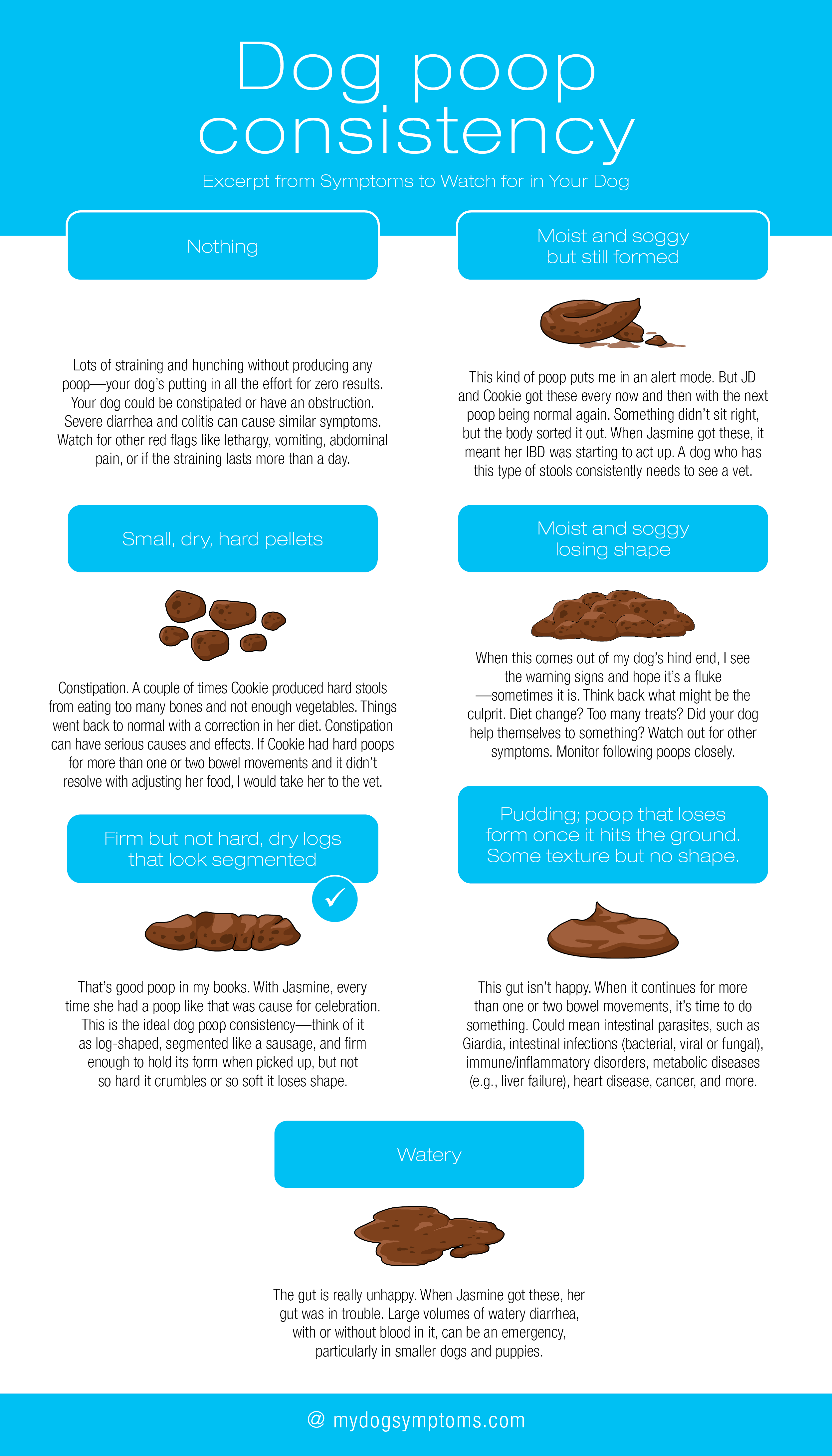
Dog poop consistency infographic
Blood in Dog Stool: Why Is There Blood in My Dog’s Poop? FAQ
Not always. A small drop/stain of bright red blood in otherwise normal stool, without other symptoms, may resolve on its own. Blood in the stool repeatedly, larger amounts, dark stools, or additional symptoms require prompt veterinary attention.
Bright red blood usually comes from the lower digestive tract, such as the colon, rectum, or anal area. It is often associated with colitis, dietary irritation, stress, or minor injuries.
Dark, tarry stool (melena) indicates digested blood from higher up in the gastrointestinal tract. This is always concerning and should be evaluated by a veterinarian as soon as possible.
Yes. Diarrhea can irritate the colon enough to cause mucus or small amounts of blood, especially after dietary changes or stress. If diarrhea with blood persists or worsens, a vet visit is recommended.
Yes. Stress can trigger stress colitis, which often causes diarrhea with mucus and fresh red blood. While not always dangerous, it should be monitored closely and discussed with your veterinarian.
Yes. Parasites such as hookworms, whipworms, Giardia, and Coccidia can cause blood in stool. These infections can be serious, especially in puppies, and require veterinary treatment.
Yes, dietary issues are a common culprit for blood in dog stool, often leading to irritation or inflammation in the GI tract. Sudden food changes, low-quality diets, or ingesting irritants like bones, garbage, or allergens can cause stress colitis with fresh red blood or mucus. If blood appears after a diet switch, monitor for 24 hours and consult a vet if it persists—see our sections on causes and emergency signs for more.
Yes. Any amount of blood in a puppy’s stool is considered an emergency. Puppies are especially vulnerable to conditions like parvovirus, which can be life-threatening without immediate care.
Yes. Foreign objects, bones, sticks, or dietary indiscretions can upset/ injure the gastrointestinal tract and cause bleeding. The severity depends on the object and associated symptoms.
Acute Hemorrhagic Diarrhea Syndrome (formerly HGE) causes sudden, severe bloody diarrhea that may resemble pure blood. This condition can escalate rapidly and requires immediate veterinary care.
Contact your veterinarian if blood appears repeatedly, in large amounts, is accompanied by diarrhea, vomiting, lethargy, pain, pale gums, weakness, or if the stool looks dark or tarry. When in doubt, it’s always safer to ask.
Yes. Puppies, small breeds, and dogs with chronic conditions like IBD may be more vulnerable. Breed tendencies, immune health, and lifestyle factors all play a role.
Preventing blood in stool starts with proactive care: Feed a diverse, balanced diet to avoid GI upset. Stay on top of parasites. Keep toxins (e.g., rat poison, chocolate) out of reach to prevent clotting issues or toxicity. Annual vet checkups, especially for at-risk breeds like puppies or seniors, catch early problems. Vaccinate against parvovirus, and manage stress with routine exercise and confidence building. If your dog has recurrent episodes, a fecal test or allergy panel can help—always watch for accompanying signs like vomiting, and use our Emergency Checker Tool for quick assessments.
Related articles:
What’s in the Poop?
Mucus in Dog Stool: What Is The Slime in My Dog’s Poop?
Is Tarry Stool an Emergency? Melena in Dogs
Further reading:
Why Is My Dog Pooping Blood?
Oh, the dreaded HGE. My Harley girl had bouts of this, thankfully we were able to correct it each time. An awful lot of blood, what I called “raspberry diarrhea” – she had a sensitive stomach more so as she grew older. My boy Wolf had anxiety, so as he aged he, too, had some bouts of it. We were fortunate that it was treatable as some cases can be life threatening. Like you said, there is A LOT of blood. But a check with the vet was always our go-to. You know I’m Pinning this important info to share!
Great post with lots of information, thanks. I always learn something from your blog which makes my life less stressful in so many ways
Very informative article! I really appreciate the details about what could cause blood in your dog’s poop. I’m a big poop inspector. My dog, Henry, has always had GI issues since I adopted him. Thankfully, though he’s not experienced blood in his poop. I will continue to inspect his poop. I think it’s always telling as to how the fur kids feel. I’ve always inspected all my critters poop. I’m sharing this one with all my animal friends.
If I found blood in my cat’s stool they would be down at the vet as soon as I could get them in a carrier. I can think of few things more scary (for me).
I appreciate your comprehensive list of possible causes because an informed dog parent is a dog parent who will be able to take an sensible course of action backed by an understanding of what the symptoms can mean. They will not panic but they WILL go to the vet.
I’m thankful I never had any blood in my cat’s stool. I definitely agree about erring on the side of caution and checking with your vet in case. Thanks for sharing this informative post.
It’s not pretty, but it’s so important to keep an eye on our dogs’ bathroom habits and take note of any unusual changes. It’s always better to notice, and treat, any potential issues early on than to wait until they get worse.
I honestly don’t think either of my dogs ever had blood in their stool, even though they were 12 and 13 years old. So many things can manifest themselves as blood in the stool. Thanks for all this information!