


Examining your dog’s pee can provide a great deal of information about their physical condition and health.
Your dog’s urine contains compounds produced by the body, and monitoring them can provide valuable diagnostic clues. Changes in urination and urine quality don’t only indicate problems within the urinary tract itself. They can signify a systemic disease.


Urinary habits
If you notice any of the following, you want to have your dog examined by a veterinarian. Be aware of urination frequency, painful urination, or loss of the ability to hold urine.
Excessive urination
Excessive urination (polyuria), usually combined with excessive drinking (polydipsia), is an important symptom that can signal several health problems, such as diabetes, Cushing’s disease, Addison’s disease, kidney or liver failure, and infection.
Bladder infections rarely cause true polyuria. However, kidney infections can impair the kidneys’ ability to concentrate urine, leading to increased urine volume and more frequent urination.
Excessive thirst/urination often results from the body trying to flush out excess substances (e.g., sugar in diabetes) or compensate for organ dysfunction—your dog might produce dilute, pale urine in large amounts, sometimes leading to accidents indoors.

Some medications, such as steroids, lead to excessive thirst and excessive urination as a result. When Jasmine was on steroids for her neck issues, all she wanted to do was to drink. Cookie was once on a long-term antibiotic that made her have to go pee every three hours. I’m not kidding—massive amounts. And she didn’t know she had to until it was too late. I had to set an alarm every three hours, wake her up, only to barely make it outside. We had “catch containers” and pee pads ready throughout the house just in case. I have no idea how we survived this regime for five weeks. At least, the antibiotic did what it was supposed to.

Further reading: Excessive Drinking in Dogs (Polydipsia): Why Is My Dog Unusually Thirsty?
Straining to urinate
If your dog strains, whimpers, or takes longer to urinate with only small amounts produced, this could indicate painful urination from:
- urinary tract infections
- urinary tract obstruction
- tumors
- bladder stones
- or prostate disease (in males).
However, the primary cause of dysuria are bladder infections. Watch for drops of blood or frequent squatting.


Urinary tract obstruction (unable to pass urine despite straining) is an emergency and requires immediate veterinary care.
Male dogs are at higher risk due to prostate enlargement or stones blocking the urethra, leading to buildup and potential rupture.
Bladder stones can cause bloody, cloudy urine with straining and vary by type
- struvite from infections
- oxalate from diet/pH
- urate in breeds like Dalmatians

Incontinence
Incontinence is most common in older dogs, but it can happen at any age. It is most common in spayed females, though it can affect male dogs also. In male dogs, the cause is often:
- hormonal deficiencies
- and/or loss of control of the urethral sphincter (the muscle that closes the bladder)
However, anatomical, structural, or neurological abnormalities of the urinary tract can also be responsible.
Your dog might also be unable to hold their urine due to excessive drinking or a urinary tract infection. However, true incontinence typically shows as uncontrolled dribbling or wet spots where your dog rests.
Spayed females often develop this due to estrogen deficiency, which can weaken the sphincter, a common finding in breeds such as Boxers and Dobermans.
Males might become incontinent due to prostate enlargement, leading to leaks during sleep.
If an adult dog becomes acutely unable to hold urine, rule out neurological conditions such as spinal injuries.

Important distinctions
It is essential to distinguish between polyuria, dysuria, and urinary incontinence. Each of these symptoms has its own set of potential causes.
Polyuria
With polyuria, your dog will produce large volumes of urine and may urinate quite frequently. Dogs suffering from polyuria may not be able to hold their urine for long periods of time.
Polyuria is typically accompanied by polydipsia (excessive drinking). Dogs with polyuria also usually produce very dilute urine, which may be clear or have a very light yellow coloration.
Dysuria
By contrast, dogs suffering from dysuria generally urinate quite frequently but produce only small amounts of urine each time. In some cases, you may see blood in the urine, depending on the cause.
This often points to painful urination. Watch for whimpering, straining, or drops of blood.
Urinary incontinence
Dogs with urinary incontinence lose the ability to control their urination. They urinate involuntarily and sometimes unknowingly.
These dogs often leave wet spots where they have slept or rested. They may also dribble urine while awake. The dog is typically unaware that the urination is happening. Incontinence is most common in older dogs, but it can happen at any age.
Differentiating between these symptoms can sometimes be challenging. It may not be possible to tell, at home, exactly what is happening.
If you see or suspect any of these symptoms, see a veterinarian. Your veterinarian can help determine whether your dog is suffering from polyuria, dysuria, or urinary incontinence with the help of:
- medical history
- physical examination
- urinalysis
Urine color
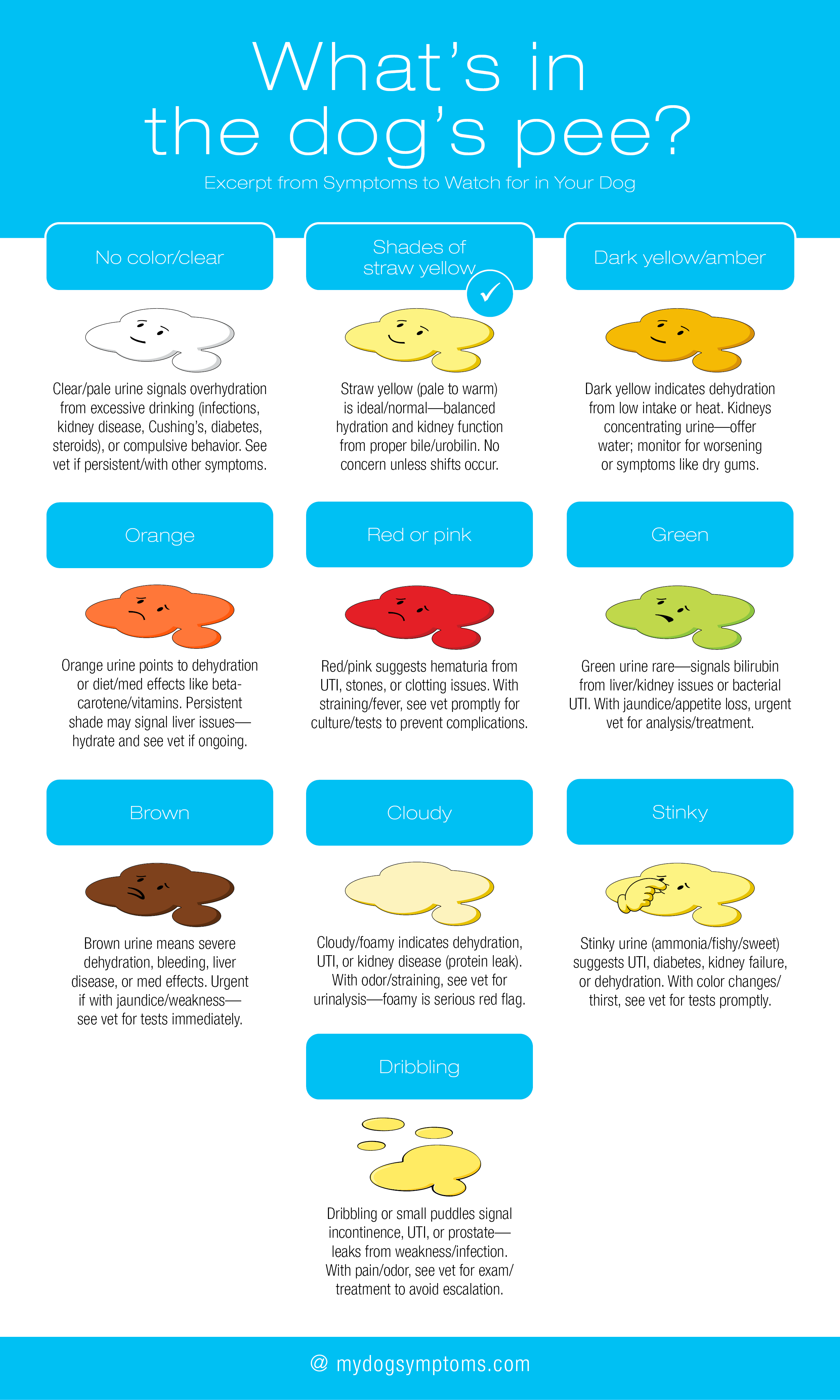
Normal urine should be clear and light yellow to light amber in color.
Pale or clear urine
Pale or clear urine could mean over-hydration. But it can also indicate kidney disease or other conditions that interfere with urine concentration.
A single episode of pale or clear urine is usually not significant, mainly if your dog just “tanked up” from the water bowl. However, a persistently pale or clear color usually indicates dilute urine. This may be due to the kidney’s inability to concentrate the urine for various reasons. This is especially true if dilute urine is accompanied by a greater than normal desire to drink water.
Dark yellow urine
Dark yellow usually signals dehydration.
A single episode of dark yellow urine may not be significant. However, persistently dark urine may indicate a problem and warrants a trip to the veterinarian.
Dark yellow urine, particularly when accompanied by other symptoms of illness such as a lack of appetite, lethargy, vomiting, or diarrhea is a cause for concern and will require a veterinary visit.
Red, orange, or brown urine
Urine that has a color other than shades of yellow is always bad news. Red, orange, or brown discoloration can be a sign of:
- bleeding into the urinary tract
- damage to red blood cells
- liver disease
- or the breakdown of muscle fibers
Orange or brown-colored urine can be caused by bilirubin or myoglobin in the urine. Bilirubin may be present in the urine if your dog’s liver is not functioning normally or if your dog is suffering from the widespread destruction of red blood cells, such as is seen in autoimmune hemolytic anemia (AIHA). Myoglobin is released from muscles when they are severely damaged, as can occur in cases of heatstroke.
If your dog’s urine is red, orange, or brown you want to see your veterinarian as soon as possible.
Blood in urine
Your dog may have blood in their urine for many different reasons.
For example, bladder infections can cause bloody urine, as can bladder stones, tumors, and other diseases.
Cloudy urine
Particles such as bacteria, white blood cells, crystals, proteins, or fats are suspended in urine, making it hazy or milky.
Recurrent cloudiness may be a red flag for bladder stones—struvite from infections (alkaline pH), calcium oxalate from diet/acid urine, or urate in breeds such as Dalmatian.
Infections (UTIs) are a common culprit, especially in females due to shorter urethras allowing easier bacterial entry.
In brachycephalic breeds, such as Bulldogs or Pugs, cloudiness may be associated with chronic UTIs or stones, often with blood-tinged urine.
Watch for accompanying foul odor or frequent urination. If cloudy urine recurs, see a veterinarian.
Foamy urine
Foamy urine indicates excess protein. This means that the kidneys leak proteins rather than filtering them properly. This can happen with chronic kidney disease, infections, or immune-mediated issues.
The urine will be topped by bubbles that linger after urination. The urine itself can be either dilute or dark, depending on the cause.
In breeds prone to kidney problems, like Cocker Spaniels or Samoyeds, foamy urine is the first warning.
If foam persists or accompanies swelling (edema) in the legs or abdomen due to protein loss, seek veterinary care urgently.
Always differentiate from normal bubbles (from forceful stream) by checking if they dissipate quickly.

Bladder infections, particularly if recurrent or not responsive to treatment, signify a larger problem.
Uroliths (bladder stones) come in several different types. Struvite stones are most often associated with infection. Stones are not likely to resolve until the infection is controlled and the stones are dissolved with special foods or medications to acidify the urine.
Calcium oxalate stones are sometimes seen when the pH of urine is higher than normal. In Dalmatians, urate stones are common. Stones of a mixed composition may be seen in some dogs. Identification of the type of stone present is important in order to choose the correct treatment option (e.g., surgery versus medical dissolution) and prevention plan.
Worried about the appearance of your dog’s pee?


Try our FREE Is This and Emergency? Symptom Checker tool to expand on appearance, smell, and accompanying signs for a quick urgency assessment and vet recommendations.
Breed specific notes
Dalmatians
Dalmatians are prone to urate stones from a genetic liver enzyme defect, leading to cloudy or bloody urine with straining/dysuria. Their high uric acid levels increase the risk of acidic urine. Monitor for crystals or a red tinge.
German Shepherds and Rottweilers
These breeds are susceptible to EPI or kidney disease, which can cause dilute/pale urine due to malabsorption/polydipsia.
Small Breeds (e.g., Shih Tzus, Miniature Schnauzers)
Small breeds are at higher risk of bladder stones (oxalate/struvite), presenting with cloudy urine and infection or blood. Their anatomy increases the risk of UTIs, leading to frequent dysuria.
Cocker Spaniels and Samoyeds
Genetic renal diseases cause proteinuria with foamy urine early on, progressing to kidney failure, pale/dilute signals, and inability to concentrate.
Further reading: 8 Common Urinary Problems in Dogs
Congenital/Inherited Urinary Disorders
Bladder/Kidney Stones in Dogs
Urinary Tract Infections in Dogs
In closing
Most dog parents try to have as little to do with their dog’s pee as possible—I don’t blame you. However, looking for changes in urinary habits and urine characteristics is an excellent way to monitor your dog’s health.
Think like a dog and learn to examine your dog’s pee!
Many thanks to Dr. Lorie Huston for helping with this article!

Examine Your Dog’s Pee FAQ
Normal dog urine is clear to light yellow/amber, with a mild odor. It should flow easily without straining, and your dog should urinate 3-5 times daily (more for puppies/small breeds). Variations can occur from diet or hydration—e.g., darker after fasting. If it’s consistently pale (over-hydration/kidney issues) or dark (dehydration), monitor habits. For a full analysis, collect a sample for vet urinalysis (see our guide to Veterinary Urinalysis). Always note changes in color, clarity, or frequency as early signs of health problems.
Straining (dysuria) often indicates pain or obstruction, like UTIs, bladder stones, prostate issues in males, or tumors. Symptoms include small dribbles, blood, or frequent attempts without much output. It’s an emergency if your dog can’t urinate at all (risk of bladder rupture). Home check: Observe posture (hunched) and urine color (cloudy/red). See a vet immediately for exams/imaging; prevention includes regular checkups and cranberry supplements for prone breeds. Link to our UTI and stones articles for more.
Urine color shifts signal issues: Pale/clear from excessive drinking (diabetes/Cushing’s), dark yellow from dehydration, red/brown from blood (infections/stones) or bilirubin (liver problems), cloudy from bacteria/crystals (UTIs). Foamy suggests protein leak (kidney disease). Diet (e.g., beets turning pink) or meds can cause temporary changes, but persistent ones need vet attention. What you can notice on your own: Daily checks during walks. For diagnosis, a urinalysis reveals specifics—read our Veterinary Urinalysis guide.
Incontinence is involuntary leaking (e.g., wet spots while sleeping), common in spayed females/seniors due to hormone loss or neurological issues—no pain/straining. UTIs cause frequent, painful urination with blood/cloudiness/accidents while awake. Distinguish by observing: Leaks without awareness = incontinence; urgency/odor = UTI. Both need vet care (hormone therapy for incontinence, antibiotics for UTIs). Home tip: Note timing and urine smell. Related: Our articles on UTIs and breed-specific risks.
Yes, breeds like Dalmatians (urate stones causing bloody/cloudy urine), German Shepherds (kidney disease with pale urine), and small breeds (Shih Tzus/Schnauzers prone to UTIs/stones) have genetic vulnerabilities. Large breeds may face prostate issues (males) leading to straining. Puppies/seniors across breeds dehydrate faster. Prevention: Breed-tailored diets, regular vet screens. What you can notice: Increased frequency in small dogs or straining in males. For deeper insights, combine home observations with professional urinalysis.
Promote good habits with fresh water access, balanced diet (low-ash for stone-prone breeds), and regular exercise to avoid obesity-linked issues. Prevent UTIs by wiping females after outdoors and annual checkups. For stones, avoid high-purine foods in Dalmatians. Home monitoring: Track pee color/habits weekly. If changes appear, early vet intervention prevents escalation—use our Emergency Checker for quick assessments. See our Urinalysis guide for what tests reveal.
Collect if you notice changes like color shifts, straining, accidents, or odor—ideally a “free-catch” mid-stream sample in a clean container (morning first pee best). Refrigerate if not immediate. It’s crucial for diagnosing UTIs, stones, or systemic issues. What you can notice on your own helps guide the vet. For full details on what tests show, check our Veterinary Urinalysis article.
Related articles:
Veterinary Urinalysis: What Can a Veterinarian Learn from Your Dog’s Pee
My Dog’s Pee: What Can You Learn from Your Dog’s Urine
Brown Urine in Dogs: Why Is My Dog’s Pee Dark/Brown?
Stinky Urine in Dogs: Why Does My Dog’s Pee Smell Bad?
Canine Hematuria: Blood in Urine. Why Is There Blood in My Dog’s Pee?
Further reading:
Why You Should Watch Your Dog Pee