


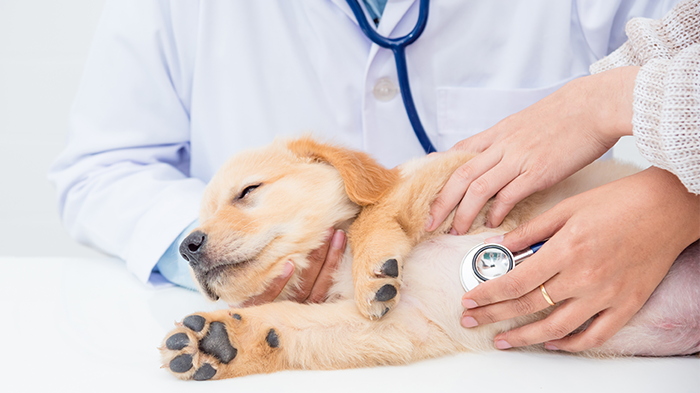
When I reflect on all the veterinarians we’ve worked with—and it had been quite a few, it brings up an important question. What makes a good veterinarian?
Out of all the choices you need to make for your dog’s well-being, this is one of the essential decisions. A good veterinarian is worth their weight in gold.


Spoiler alert: A good veterinarian isn’t one who knows everything or never makes mistakes. There is no such thing.
Now, I am not talking about finding a veterinary clinic. The right veterinary clinic and the right veterinarian may or may not be the same thing. This is particularly true with large vet hospitals.
With plenty of factors to consider, deciding on the right veterinarian can feel like an overwhelming process.
Pet360
Finding a good veterinarian is not as easy as it seems. Further, you might not know how good was your choice until push comes to shove. Handling routine tasks and diagnoses is different than facing a patient with a complicated, hard-to-diagnose issue.
Objective criteria that make for a good veterinarian
- credentials and experience
- continued learning
- diagnostic skills
- fear-free approach
- pain-free philosophy
- communication skills
- listening skills
- commitment to care
- nutrition philosophy
- keeping up with the times
Credentials and experience
Credentials are, clearly important. On the other hand, how many fake veterinarians do you think are there? How many veterinarians are out there who got their diploma at the University of Albenia?
You can check the credentials of your short-listed veterinarians online easily enough. If you want to be more thorough, the American Veterinary Medical Association has a list of accredited veterinary colleges. It includes colleges within and outside the U.S.
Online profiles typically list history and experience as well. That information is likely more relevant for practical purposes.
Continued learning
This is an important and telling yardstick. Medical advances, breakthroughs, and even corrections of old beliefs happen every day. Further, dedication to continued learning reflects a passion for the profession and patient care–the patient being your dog.
Important note, though. Learning doesn’t only take place in schools and at seminars. Learning should happen every day. And, yes, a good veterinarian learns from their patients and clients too.
Diagnostic skills
This point is absolutely vital. I would say that diagnostic skills make up at least 60-70 percent of what makes a good veterinarian.
Unfortunately, you don’t often get to evaluate them until your dog is already seriously ill.
You can ask your friends and neighbors but trust me, that doesn’t always tell you much. If you add information from local trainers, the staff at pet stores, grooming, and boarding facilities you might obtain a fuller picture.
Here is a super secret tip from Speaking for Spot by Dr. Nancy Kay. Do not disclose.
Far and away the most trustworthy and accurate opinions come from staff at your local emergency hospital
Dr. Nancy Kay, Speaking for Spot
I absolutely agree that that is where you’d get the most valuable information. However, getting the lowdown on your prospective veterinarian this way is tricky. You cannot just walk in there and ask. Well, you can but the odds somebody will tell you are low.
But if you want to learn how to do that, I’m sorry, I’m not telling. If you’re reading this article, you absolutely need to read Dr. Kay’s book as well. So do yourself and your dog a favor and grab a copy. Yes, it is a shameless plug. I’m not getting anything for it–no affiliate link. I want you to read the book for your dog’s sake.
Diagnostic skills include both hands-on examination, observation skills, and knowledge and mastery of diagnostic tests and tools. The bigger and more diverse your veterinarian’s toolbox, the better chance they will figure out what is going on with your dog.
Fear-free approach
Fear-free veterinary medicine is a relatively new movement. I can tell you, though, that great veterinarians, such as Jasmine’s vet, had been practicing it long before it became a thing. You can Google what it stands for–it is just as important as it is self-explanatory.
These days, there is even a certification program for that.
Pain-free philosophy
You don’t want your dog to be in pain. Your veterinarian should strive for the same. Yet, there are still veterinarians out there who send a dog home after surgery with no pain medications.
Finding out about your prospective veterinarian’s pain management philosophy is essential. I wish there was a standard in place but unless you’re working with an AAHA accredited clinic, it seems to be luck of a draw. So do ask about it.
Communication skills
By communication skills, I don’t mean bedside manners. While good bedside manner is a “nice have,” I don’t consider it all that important. In other words, I’d rather have a competent a-hole than nice, pleasant and useless. It’s only bedside manners toward my dog(s) that really matter to me.
By communication skills, I mean the ability to explain their findings, laboratory results, and treatment options so the client can understand it. Because you cannot make educated decisions about your dog’s care unless you understand what is going on.
I have put together a series of checklists that can go a long way to facilitate this process. They’re free so go grab your Veterinary Visit Checklists.
Listening skills
I cannot understate the importance that your veterinarian be a good listener. This is imperative. Nobody can make a useful diagnosis without considering a detailed history. If they don’t consider all your observations and concerns, how can you get anywhere? Being able to take a thorough history is more important than all other diagnostic tools combined.
A good veterinarian will listen to what you say. Moreover, with the right questions, they can get information out of you which you didn’t know you had. (Btw, I have a checklist for that too.)
I cannot express what a source of great frustration a veterinarian who doesn’t listen can be. But it is more than annoyance–it can even be dangerous and definitely detrimental to the outcome.
While I don’t expect perfection–nobody is perfect–not listening is an immediate firing offense.
A study in human medicine showed that history alone led to a final diagnosis in 76 percent of patients!
Peterson MC, Holbrook JH, Von Hales D, Smith NL, Staker LV. Contributions of the history, physical examination, and laboratory investigation in making medical diagnoses. West J Med. 1992;156:163–165. [PMC free article] [PubMed] [Google Scholar]
Commitment to care
You could say that commitment to care is a summary of all the above points. And it is. So why address it separately? Because it is all of the above and more.
When your dog’s circumstances call for it, it includes
- finding unorthodox solutions
- customizing treatment plan
- considering your online research
- consulting with colleagues or specialists
- referrals to specialists
- working with veterinarians from different fields, such as Traditional Chinese Veterinary Medicine (TCVM) or holistic veterinarians
- allowing or encouraging second opinions
- accessibility via email or phone
- and more
In other words, doing whatever it takes to make your dog better.
Nutrition philosophy
Nutrition is the foundation of health. It is also a highly controversial subject. It is hard to work with a veterinarian who opposes what you believe is the best nutrition for your dog. You might not be able to work together at all. So it is definitely something to consider.
Keeping up with the times
In 2025, good vets adapt to trends like telehealth for follow-ups, AI-assisted diagnostics, and integrative care blending Western and holistic methods. With vet shortages, prioritize those offering extended hours or partnerships with specialists.
Would you guess that our main vet, the one I constantly sing praises to started what would qualify as telehealth service when it was in a cradle?
Red flags to avoid
Watch for rushed appointments, over-reliance on tests without explanation, pushy upselling, or ignoring your input—these signal poor partnership. Switch if your dog seems stressed during visits.


Veterinarians are people first
With the objective criteria out of the way, we can now get to the crux of the matter.
Veterinarians are not machines—they are people. Each of them is a unique individual. Michelangelo, Einstein … it was not their education or their affiliations what made them who they were.
Every veterinarian is a person first, then a veterinarian.
What kind of person is your veterinarian?
Their education might be the same, the information out there is available equally to all of them. It is what they do with it what makes the difference.
Does age matter?
Do you prefer an experienced old-timer? Or a young vet who doesn’t that much experience but is more likely to be up to date with all the new treatments and techniques?
Well, I can tell you that it is not as simple as that.
#1 An old-timer
Jasmine’s vet is an old-timer. Yet, he is on top of all the latest research and treatments. I haven’t stumped him yet, and, believe me, I ask all kinds of questions.
Results: Diagnosed and treated issues that went undiagnosed for years.
#2 A young vet
Jasmine’s earlier vet was a young one. Up-to-date on latest breakthroughs? No. He was the type who believed that since he’s made it through the vet school he now knows everything.
Result: No useful diagnosis; lost in the dark.
#3 An experienced professional
Jasmine’s first vet was an experienced practitioner, working in a reputable clinic. He seemed to know his stuff. But he couldn’t see the forest for the trees when it came to diagnosing.
Result: No useful diagnosis, symptomatic treatment.
Conclusion: Age alone does not tell you whether your vet can get results or not. And it is the results that matter. Further, while experience can be an advantage, it also breeds biases which can be a disadvantage.
Age or gender is not on my list of considerations when choosing a veterinarian.
Friend recommendations
Are friend recommendations useful? There might be but don’t count on it. The average veterinary client rarely gets enough experience to judge much less than their personal impression with the clinic and veterinarian’s bedside manners.
The vet #2 we switched to from vet #3 came with a great recommendation from our friends. Because we were frustrated with the lack of results with Jasmine’s issues, we were asking around.
As we heard all the friends’ stories about how wonderful their vet was, we were excited to get him on board. He did seem to care about Jasmine and was very nice. And yet he became a source of great disappointment.
He didn’t listen and cut corners that shouldn’t have been cut.
The importance of priorities
What is your prospective vets’ main priority?
- an academic interest?
- personal success and image?
- their own ego?
- looking good in front of the clients?
- is it just business?
- or is it well-being of their patient?
We’ve met them all. While some of the above priorities can still bring good outcomes, which one do you think makes the best veterinarian?
A veterinarian with strictly academic interest might arrive at the right diagnosis because of their fascination with the process. One that puts personal success and image first can do a good job in order not to look bad. Yes, I got to watch what that looked like. The final result was ok. But when it came time to cooperate with a colleague, everything broke down.
It was the veterinarian #1, the old-timer, who left them all in the dust over and over again in every way.
It comes down to attitude
Intellect, education, those are all important things. Experience is great, but it can work both for or against your dog. Attitude, however, is what will make the difference when it really matters.
If your vet really cares about his patients, they will
- keep up with the newest research and treatments
- listen to what you’re saying
- take your dog’s symptoms seriously
- discuss things with you
- consider what you came up with during your research
- seek a second opinion when unsure
- have the drive to do everything that needs to be done to make your dog well
We dealt with many veterinarians. Vets who
- lost the motivation to work their way to a diagnosis in a complicated case and were satisfied with merely dealing with the symptom(s)
- made up their minds about things before hearing out what we observed in our dog
- knew it all and nobody, particularly not dumb owners, could tell them anything
- to whom their professional pride meant more than their patient
- jump out of their skin at the notion of looking for a second opinion
They all had similar academic credentials. They came in different sizes, ages, genders and levels of experience.
In the end, attitude is what makes it or breaks it.
We love and cherish Jasmine’s vet. Do we agree on everything? No, we don’t. Is he infallible? No, he isn’t. But he always bent over backward for Jasmine’s benefit.
Is my bar too high? Probably. Most of the time, all you need is a good vet. What we needed was more than that. Hopefully, you never do; they are hard to find. I would take a bullet for Jasmine’s vet.
Even though Jasmine has passed on since and we have moved, I still keep in touch with him. I was very worried about having to get another vet in our new location. But we found a great one here too. Great veterinarians are out there. When you find one, cherish them.
What Makes a Good Vet Breed-Specific Notes
While vet qualities are universal, certain breeds benefit from specialized knowledge—add after qualities:
- High-Energy/Working Breeds (e.g., Border Collies, German Shepherds): Seek vets experienced in orthopedic issues (e.g., hip dysplasia) and nutrition for active lifestyles.
- Brachycephalic Breeds (e.g., Bulldogs, Pugs): Prioritize those knowledgeable in respiratory/anesthesia risks for surgeries.
- Small/Toy Breeds (e.g., Chihuahuas, Yorkies): Look for expertise in dental care and metabolic disorders like diabetes.
- Senior or Chronic-Issue Breeds (e.g., Labradors prone to obesity/cancer): Choose vets with geriatric focus and palliative options.
What others think makes a good vet
I have just switched vets. It feels like breaking up with an old friend. I loved my old one, however I learned where they choose to practice affects my choice as well.
Miss Kodee, Bark’n About
New office meant new vaccination policies, less availability, and, well, about the billing…
When searching for a new vet, the important things I looked for where–ones who are open to holistic approach as well, confident enough to value/refer to a specialists and whose egos aren’t so big they willingly do added research when treating an disease new to them.
The best vets are those who act with confidence from the moment you walk in and make you and your pet feel like everything is going to be OK because they, the expert, are taking over and know exactly what to do.
Melanie, Mad Paws
Awesome vets perform a full exam, write their findings, and share them with you, the dedicated pet parent.
Dr. Phil Zeltzman, DVM, DACVS, CVJ, Pet health Network
What they don’t do is jump to conclusions. They don’t just do the obvious and wave goodbye. They don’t believe in the 2-minute veterinary consult.
Veterinarian stress test
You can take advantage of this clever shortcut: walk in the veterinary exam room with my free veterinary visit checklists and see how the veterinarian handles it. The checklists were not meant for this purpose but they will give you a quick idea of how dedicated to your dog’s care your veterinarian is.
If you use this test, do let me know how it went.
Your turn. What do you believe makes a good vet?
What Makes a Good Veterinarian FAQ
Empathy, strong communication, up-to-date knowledge, and a holistic approach—see our list for details.
Ask for recommendations, visit clinics, and interview on topics like emergencies or breed specifics.
Rushed visits, poor hygiene, or dismissing your concerns—trust your gut and switch if needed.
Yes if interested in natural options, but ensure they’re certified and integrate with traditional care.
If communication breaks or needs aren’t met—loyalty is good, but your dog’s health comes first.
General vets handle routine care; specialists (e.g., oncologists) for complex issues—good vets refer when needed.
For follow-ups or minor advice in 2025, but in-person for exams—check if your vet offers it.
Related articles:
Looking For A New Veterinarian: Our List Of Questions
Further reading:
Picking The Right Vet: A Cheat Sheet