


Why does it matter what your dog’s poop looks like?
Dog poop consistency is one of the most useful clues about your dog’s health. The longer I’ve been a dog mom, the more attention I’ve learned to pay to poop. It started with Jasmine who had ongoing poop issues from the day she came to us. After years of being left in the dark, she was finally diagnosed with IBD (Inflammatory Bowel Disease). Every time her stool was normal, it made my day brighter.


Our guys got a bad poop every now and then. This is more of a reflection of what they got into than an actual health issue. If the abnormalities continue, though, I will look into figuring out what’s behind it. When the stools are consistently or chronically abnormal, you need to investigate.
Dog poop consistency
What I consider ideal poop could be best described as hand-rolled chocolate cookie dough—brown, well-shaped, firm but not hard, kind of segmented.

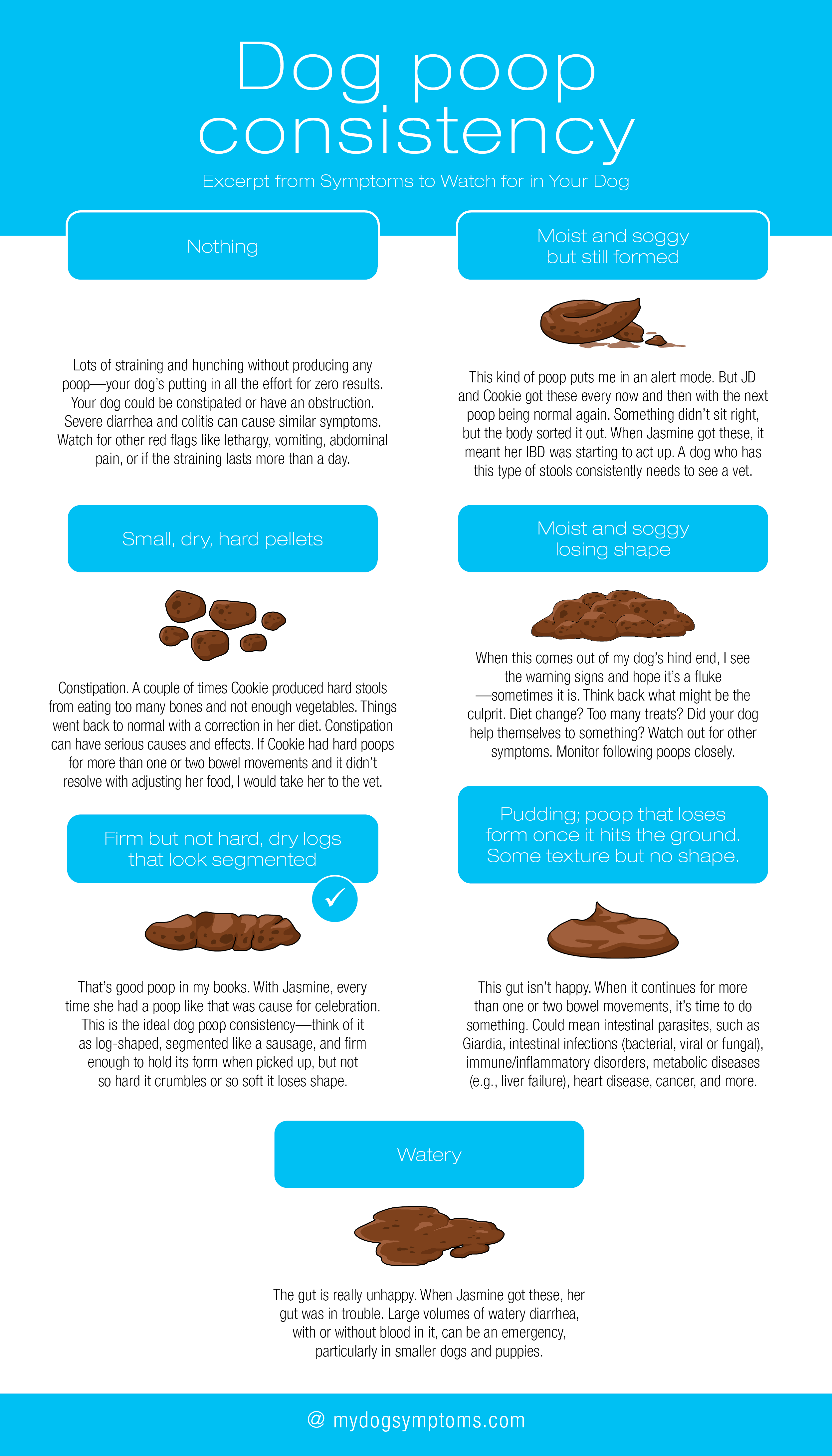
To some degree, consistency can depend on the dog and their diet. However, the stool shouldn’t be consistently too hard or too loose. Which brings me back to the cookie dough.
Diarrhea
Diarrhea is a more common problem than constipation for dogs. In fact, people often think that their dog is constipated when in fact they have diarrhea. Lots of straining with nothing coming out can be a sign of large bowel diarrhea as well as constipation. It is important not to try to treat constipation without having a solid confirmation (pun kind of intended).
Constipation
Constipation may simply be caused by insufficient fiber and water intake but can also have a more serious underlying cause.
With Jasmine, I kept a detailed chart where I entered day-to-day information, including her stool quality and a number of bowel movements. There are official fecal scoring charts out there, going into various amounts of detail. For Jasmine, I was using 5 values with 5 being ideal and 1 being watery (Jasmine didn’t have problems with constipation). The most typical scoring system goes to 7 with 1 being constipated and 7 being watery. (I came up with my own scoring back then before I knew there were systems in place already)
Stool observations


Nothing (or almost nothing)
It’s not good when a lot of straining and hunching doesn’t produce any poop at all. This is called tenesmus—a feeling of urgency and discomfort in the colon that leads to repeated, unproductive attempts to go.
Your dog could be constipated or even blocked up (e.g., from swallowing bones, toys, or other foreign objects).
Severe diarrhea and colitis can cause similar symptoms. Dog parents often mistake this for constipation when it’s actually the gut’s irritated response to inflammation or infection. In either case, see a vet promptly—blockages can be life-threatening.
If your dog strains and only small amounts of liquid come out (often with mucus or blood), it can be from:
- colitis—the guts are still upset and trying to remove contents while there is hardly any left. This is common with stress colitis, parasites, or dietary issues, leading to frequent small squirts rather than full bowel movements.
- severe constipation or foreign body blockage—allowing only liquid to make it through or around the obstruction, while solid stool stays trapped.
Other causes of unproductive straining might include:
- prostate problems (in intact males)
- neurological conditions
- anal glands impaction/abscess
- pain from arthritis/trauma that makes squatting difficult
- tumors (rectal/anal)
Watch for other red flags like lethargy, vomiting, abdominal pain, or if the straining lasts more than a day.
Note: sometimes it’s easy to confuse straining to poop with straining to urinate because the posture can look similar, especially in female dogs.
Further reading: Dyschezia and Tenesmus


Small, dry, hard pellets


Yes, that’s constipation. A couple of times, Cookie got hard stools from eating too many bones and not enough vegetables. I immediately corrected that, and things went back to normal. Constipation can have serious causes and effects. If Cookie had hard poops for more than one or two bowel movements and it didn’t resolve with adjusting her food, I’d take her to the vet.
These pebble-like pellets are tough to pass, often with straining (see the previous section on unproductive efforts). On the fecal scoring chart, this is a score 1—very hard and dry, indicating dehydration or slow gut movement.
Common causes include:
- dietary issues—too much bone content (high calcium hardens stool), low fiber (from lack of veggies or poor-quality food), or sudden changes
- dehydration—not enough water intake, especially in hot weather or with dry kibble diets
- lack of exercise—sedentary dogs have slower digestion
- medications or health conditions—pain meds, hypothyroidism, or orthopedic issues making squatting painful.
- serious problems—foreign body blockages, prostate enlargement (in males), neurological disorders, or tumors.
If constipation persists, it can lead to pain, toxin buildup, or even emergencies like bowel obstruction.
Red flags: no poop for over 48 hours, vomiting, lethargy, or blood in stool—head to the vet immediately.
Potential serious complications of prolonged constipation include:
- obstipation—when the constipated dog becomes unable to pass any stool
- megacolon—when backed-up feces stretch and widen the colon to the point where it can no longer function properly, leading to chronic issues. Other symptoms would include a distended abdomen, recurrent constipation, and vomiting
Related articles: Treating Dog Constipation at Home: Can You Help Your Constipated Dog?

Firm but not hard, dry logs that look segmented


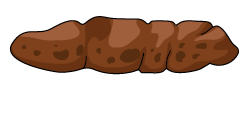
That’s a good poop in my books. With Jasmine, every time she had a poop like that, we celebrated.
This is the ideal dog poop consistency—think of it as log-shaped, segmented like a sausage, and firm enough to hold its form when picked up, but not so hard it crumbles or so soft it loses shape. It should leave little to no residue on the ground, with a Play-Doh-like texture that’s pliable and slightly moist inside.
Some variations are normal. Raw or high-fiber diets might make it slightly firmer, while wet food could soften it a bit—but it shouldn’t stray far from this.

Moist and soggy but still formed
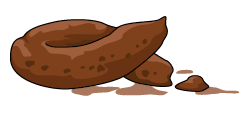
This kind of poop gets me in an alert mode. Something isn’t quite right. JD and Cookie get these every now and then, with the next poop being normal again. Something didn’t sit right, but all is now good.
When Jasmine got these, it meant her IBD was starting to act up. If my dog had these types of stools consistently, I’d investigate.
These are soft logs that hold their shape but feel moist or soggy, often leaving a bit of residue when picked up—like overripe banana consistency. It signals mild gut irritation where the colon isn’t absorbing enough water.
If this stool consistency persist, it could indicate:
- parasites (e.g., Giardia, worms)
- food sensitivities/allergies
- early IBD or other GI issues (like Jasmine’s flare-ups)
- medication side effects or infections
If soft stools persist or other symptoms like lethargy, appetite loss, or mucus crop up, see a vet.

Moist and soggy
losing shape

When this comes out of my dog’s hind end, I see the warning signs and hope it’s a fluke—sometimes it is. Think back to what might be the culprit. Diet change? Too many treats? Did your dog help themselves to something? Watch out for other symptoms. Monitor the following poops closely.
Your dog’s poop looks like a pile of soft, lumpy blobs, moist and soggy yet still somewhat holding together. Common culprits include a sudden change in diet, too many treats, mild dehydration, or even stress from routine changes.
If this stool consistency persist, it could indicate:
- parasites like worms
- bacterial imbalances
- food sensitivities or allergies
- early inflammatory bowel disease (IBD)
- stress-related gut upset
A vet check with fecal testing is wise to rule out infections—don’t ignore if accompanied by lethargy or appetite loss.

Pudding
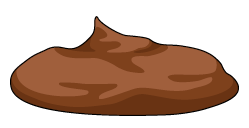
Poop that loses its form once it hits the ground; there is texture to it, but it doesn’t hold shape. This gut isn’t happy. When it continues for more than one or two bowel movements, it’s time to do something. A pudding-like dog poop consistency could mean:
- intestinal parasites (e.g., Giardia)
- intestinal infections (bacterial, viral, or fungal)
- immune/inflammatory disorders
- metabolic diseases (e.g., liver failure)
- heart disease
- cancer
- and more
This “cow patty” or pudding-like stool piles up softly without structure, often with some cohesion but spreading on impact—like soft-serve ice cream. On the fecal scoring chart, it’s a score 4-5: unformed but not liquid, indicating moderate gut upset where transit is too fast for proper water absorption.
If your dog’s pudding poop comes with blood/mucus, vomiting, lethargy, appetite loss, or in puppies/seniors (dehydration risk)—see veterinarian ASAP.

Watery
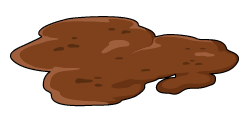
The gut is really unhappy. When Jasmine got these, her gut was in trouble. Large volumes of watery diarrhea, with or without blood in it, can be an emergency, particularly in smaller dogs and puppies.
This is liquid stool that forms flat puddles with no shape or texture—like spilled water, sometimes with urgency and frequent accidents. It indicates severe malabsorption and rapid gut transit, often from small-bowel issues.
Potential causes include:
- viral infections (e.g., parvovirus)
- bacterial infections (e.g., Salmonella, E. coli from contaminated food)
- parasites (e.g., Giardia, coccidia)
- toxins or dietary—ingestion of garbage, spoiled food, or toxins (e.g., plants, chemicals)
- systemic diseases—pancreatitis, kidney/liver failure, Addison’s disease, or cancer affecting fluid balance
- stress, medications (e.g., antibiotics disrupting gut flora), or food allergies escalating from milder diarrhea.
Emergency red flags include:
- large/frequent volumes (>3-4 times/day)
- blood (bright red or black/tarry)
- vomiting
- lethargy
- signs of dehydration (dry gums, sunken eyes, skin tenting)
- fever, or abdominal pain
Rush to the vet or ER, especially for puppies/small breeds, where dehydration hits fast.
Breed-specific notes
Large-breed dogs (e.g., Great Danes, Mastiffs) tend to have naturally softer, wetter stools with higher moisture content due to slower gut transit and higher digestive sensitivity, potentially leading to looser consistency even on balanced diets.
Further reading: Digestive sensitivity varies according to size of dogs
Small breeds (e.g., Chihuahuas, Yorkies) often have more reactive systems, showing quicker changes in poop from stress, diet tweaks, or minor issues, making them prone to firmer or inconsistent stools if dehydrated.
True breed-specific quirks are rare, but some, like brachycephalic breeds (Bulldogs, Pugs), may indirectly experience more gastrointestinal issues due to related respiratory stress that affects eating/digestion. Always tailor to your dog’s baseline!
Related articles:
My Dog’s Poop: What Can You Learn from Your Dog’s Stool
Dog Poop Color
Treating Dog Constipation at Home: Can You Help Your Constipated Dog?
Further reading:
Why Does My Veterinarian Want a Poop Sample?