


My dog has diarrhea. What caused it, and what do I do? Diarrhea and runny stools in dogs are incredibly common, but they can mean many different things—from harmless blips to serious medical problems.
Diarrhea isn’t a disease—it’s a symptom. It means something has irritated or disrupted your dog’s digestive tract. When things move through the intestines too quickly, there isn’t enough time for water and nutrients to be absorbed, and the result is loose stool.
It can happen for many different reasons, some simple and some more serious. Your dog may have eaten something they shouldn’t have (“garbage gut”), reacted to a new food, or gotten stressed or overexcited. It can also be a sign of infection, parasites, inflammation, or another underlying problem.

Definitions
Diarrhea is a medical term for unformed, loose stools. Bowel movements can be larger or more frequent, and the appearance can vary depending on what part of the digestive tract is affected. The stool may contain mucus, blood, undigested food, or even parasites.
The Purina Fecal Scoring System is a practical tool for identifying what you’re seeing. The scale ranges from 1 to 7, with 1 being very hard and dry and 7 being completely liquid. Most healthy dogs fall in the 2–3 range. Anything above 4 is considered loose stool, and scores of 6 or 7 indicate true diarrhea.

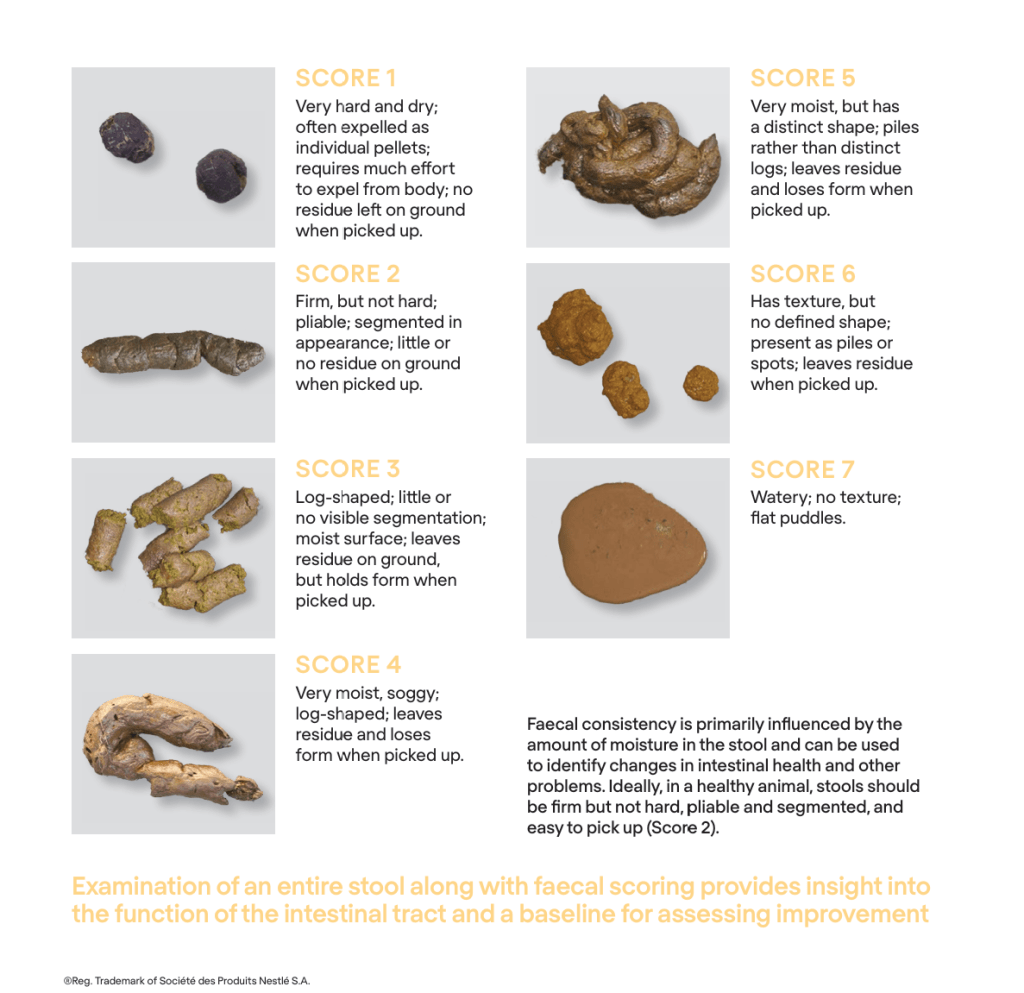
| Score | How It Looks | What It Means |
| 1 | Very hard, dry pellets | Requires a lot of effort to pass; no residue left behind. Often expelled as individual pellets. |
| 2 | Firm but pliable; segmented | Ideal stool. Little or no residue when picked up. |
| 3 | Log-shaped, moist surface | Holds form when picked up, but leaves some residue. |
| 4 | Very moist, soggy log | Leaves residue and loses form when handled. |
| 5 | Very moist piles (not logs) | Distinct shape but not firm; leaves residue and loses form. |
| 6 | No defined shape; piles or spots | Has texture but no structure; leaves residue when picked up. |
| 7 | Watery, no texture | Flat puddles; true diarrhea. |
Related articles: Dog Poop Consistency
The important question is what caused it and what to do about it.
Stopping the diarrhea is naturally the first thing that comes to mind. And in severe cases, your dog may need symptomatic treatment—such as fluids, electrolytes, or medications that soothe and protect the gut—to stabilize them and prevent dehydration. But even when that’s necessary, treating only the symptom won’t solve the underlying problem.
What causes diarrhea/runny stools in dogs?
Many different things can trigger diarrhea. Some start in the digestive tract; others don’t. Illness, stress, inflammation, infections, toxins, parasites, and systemic problems can all affect how the gut functions.
Did you know that diarrhea doesn’t even have to be caused by problems originating in the gut itself? If you only focus on stopping the diarrhea itself, you may miss what’s actually going on. Understanding the potential causes helps you figure out what needs attention.
Causes of diarrhea in dogs: summary
| Primary GI disease | Systemic conditions |
| dietary indiscretion diet change foreign body/obstruction food allergy or intolerance intestinal parasites bacterial infections viral infections fungal infections spoiled food | poisoning pancreatic disease immune-mediated disease liver disease kidney disease cancer Addison’s disease medication side effects (NSAIDs, etc.) |
Consider the big picture
How bad is the diarrhea? Is there vomiting as well? Is your dog lethargic, refusing food, or acting sick? The more concerning signs you see—and the more of them that appear together—the sooner you should seek veterinary attention.
Note: A sick puppy is always an emergency. Don’t put your puppy’s life at risk by trying to treat them at home without first having them examined by a veterinarian.
Think back
Try to determine whether anything changed recently. Did your dog get into something they shouldn’t have? Eat something unusual? Did you start a new food or medication? Even if your dog didn’t have obvious access to anything, it is still possible for a single tainted piece of food to cause trouble.
A sudden change in diet, unfamiliar foods, garbage gut, stress, excitement, or even intense exercise can all result in diarrhea.
When JD got diarrhea, we had a clear suspect. On a walk, he snatched and swallowed part of an unidentified carcass. Because we knew what he ate and he otherwise seemed normal, we tried a 24-hour fast followed by bland meals to see whether his gut would settle. It did.

Jasmine’s diarrhea was a completely different story—it lasted years, and it took five-and-a-half years to get her diagnosis…

Diarrhea/runny stools in dogs: What to expect?
Acute diarrhea from a dietary indiscretion should start to improve within 24 hours.
JD’s diarrhea lasted 48 hours, but we decided to wait another day because it wasn’t an emergency and the vet was closed on the weekend. If it hadn’t resolved, or if his overall condition had worsened—if he started vomiting or looking sick—we would have taken him in immediately.
On the other hand, when Cookie clearly didn’t feel well, we took her in even after a single episode of diarrhea and throwing up once. It saved her a lot of suffering when she came down with acute pancreatitis.
When to seek veterinary attention for diarrhea/runny stools in dogs
Severe, explosive, unrelenting diarrhea is an emergency.
Stool containing blood requires medical attention. Digested blood makes the stool appear black and tarry. Blood from the lower gastrointestinal tract will appear bright red.
If your dog continues to have diarrhea for longer than a day or two, you need to see a veterinarian. I would not wait any longer than that.
There was one time we waited longer, and we regretted it. With her IBD, Jasmine had diarrhea fairly often. She was typically put on metronidazole, an antibiotic that also decreases inflammation in the gut. Now and then, her diarrhea would resolve on its own. Hoping that might happen—and wanting to avoid yet another course of antibiotics—we decided to wait a second day to see if things improved. By the end of the day, she had blood in her diarrhea.
Large or small intestinal diarrhea? What is the difference and why it matters?
You might be more concerned about the dramatic symptoms—urgency, straining, repeated trips outside—but the quieter symptoms are often the more dangerous. Infrequent, voluminous bouts of diarrhea can carry a much higher risk.
Small intestinal diarrhea
Small intestinal diarrhea tends to be the more serious of the two. The main job of the small intestine is digestion and nutrient and fluid absorption. When it’s not working properly, it not only results in diarrhea but also prevents dogs from getting the nutrition they need. This can lead to a dog who feels unwell and may quickly lose weight.
Common causes of small intestinal diarrhea can be quite scary, including parvovirus. Other possibilities include additional viral infections, parasites, bacterial or fungal infections, poisoning, an abrupt deficiency in glucocorticoids (Addison’s disease), pancreatic disease, garbage gut, inflammatory bowel disease, cancers, systemic disease (such as liver or kidney failure), and hemorrhagic gastroenteritis.
With small intestinal diarrhea, your dog may not need to go more than two to four times a day, but they will produce large amounts of very wet stool. If there is blood in the stool, it will be dark, digested blood. With ongoing small intestinal diarrhea, your dog can start losing weight.
Large intestinal diarrhea
A dog with acute large intestinal diarrhea will need to go frequently, often urgently. They are likely to strain while defecating and pass smaller amounts of stool at a time. There may be fresh blood or mucus in the stool. Because nutrients are absorbed in the small intestine, a dog with ongoing large intestinal diarrhea generally will not lose weight.
Large intestinal diarrhea can be caused by parasites, inflammatory bowel disease, irritable bowel syndrome, cancer, bacteria, fungal infections, garbage gut, and other dietary issues.
When dogs have conditions that affect both the large and small intestines, you might observe a combination of symptoms.
Related articles:
A Tale of Many Tails—and What Came Out From Underneath
Acute Small Intestinal Diarrhea
Acute Large Intestinal Diarrhea (Acute Colitis)
Chronic Large Intestinal Diarrhea
Chronic Small Intestinal Diarrhea
When to see a vet with dog diarrhea/runny stools
Because diarrhea is such a common issue, many dog parents want to manage it at home first. In mild cases, that can make sense. A short fast, bland meals, and sometimes adding fiber or probiotics may help simple, short-lived diarrhea.
Home care only makes sense, however, when your dog is acting normal otherwise. If your dog seems unwell, is painful, refuses food, vomits, or the diarrhea isn’t starting to improve within 24 hours, you should see a veterinarian.
Garbage-gut diarrhea may resolve once the offending material leaves the system, but it still requires close monitoring. If the stool doesn’t improve within a day, or if any new symptoms appear, it’s time for a vet visit.
Trying to treat diarrhea without understanding the cause can be counterproductive and, at times, dangerous. When in doubt, it’s safer to have your dog checked.
If your dog’s diarrhea/runny stools are the only sign and your dog otherwise seems completely normal, you can see whether they improve over a day or two with dietary management. If there are any additional symptoms, don’t wait.
Related articles: Treating Dog Diarrhea at Home: How Can You Fix Your Dog’s Runny Poop?
Accompanying symptoms that call for a vet visit
- vomiting
- loss of appetite
- weakness
- lethargy
- abdominal pain
Symptoms that indicate your dog needs emergency medical attention
- explosive watery diarrhea
- diarrhea that doesn’t stop
- profuse vomiting
- weird-colored stool
- bloody diarrhea
- black tarry diarrhea
- dark red or pale gums
- sticky gums
- marked weakness or lethargy
A note on chronic diarrhea
It can be confusing when your dog’s diarrhea comes and goes. It looks like it resolved, and then it comes back. It’s not terrible—it just keeps happening. What do you do then?
If the original cause of the loose stools were gone, the loose stools would be gone too. Even if the diarrhea isn’t very runny or watery, recurring or off-and-on diarrhea still means something isn’t right. While it may not be an emergency, I still urge you to see a veterinarian. Chronic diarrhea always tells you something important.
Diarrhea/runny stools in dogs: conclusion
Diarrhea is a common problem in dogs. The reason behind it can be simple or serious. Instead of viewing it as a minor nuisance—though it often is—remember that it’s also a meaningful clue about what’s happening inside your dog’s body.
Take your cues from your dog. If a few loose stools don’t slow them down and they otherwise seem normal, it may be a self-limiting issue. If your dog looks or acts unwell, however, it’s time to seek veterinary help.
What to do when your dog has diarrhea: A step-by-step guide

Diarrhea is common, but it’s not always simple. These steps help you figure out what’s going on, what you can safely do at home, and when it’s time to involve your veterinarian.
1. Start with your dog’s overall condition
Before looking at the stool, look at your dog. Ask yourself:
- Are they bright and responsive?
- Eating or refusing food?
- Drinking normally?
- Vomiting?
- Acting painful, hunched, restless, or “off”?
- Looking or acting sick in any way?
A dog who doesn’t look well needs to see a veterinarian—diarrhea or not.
2. Assess the stool
You’re looking for simple, useful clues:
- Consistency: watery, pudding-like, soft, or formed
- Color: brown, yellow, gray, green
- Blood:
- Bright red → lower GI bleeding
- Black/tarry → digested blood (urgent)
- Mucus
- Objects: grass, garbage, bone bits
- Volume and frequency:
- Large volume, a few times/day → likely small intestine
- Frequent small amounts with urgency/straining → likely large intestine
3. Think back over the past 48 hours
Many causes are obvious in hindsight. Ask yourself if your dog:
- Ate something unusual (food, garbage, carcass, compost)?
- Had a sudden diet change?
- Tried new treats?
- Had access to toxins or human medications?
- Experienced stress, excitement, or heavy exercise?
- Recently started a new supplement?
- Had recent illness?
- Lives with someone else who’s also sick?
If there’s a clear trigger—garbage gut, dietary indiscretion, stress—mild diarrhea may settle with simple care.
4. Decide whether home care is appropriate
Home care is usually OK only if your dog:
- is acting normal
- is not vomiting
- is eating (or only mildly off food)
- is drinking normally
- has no blood in the stool
- has no serious underlying health issues
- symptoms started recently and are mild
If any of these aren’t true, skip home care and call your vet.
5. Provide simple home care for mild diarrhea
This applies only to stable, otherwise healthy dogs.
- Short fast (6–12 hours)
(skip fasting for puppies, toy breeds, seniors, or fragile dogs) - Hydration first: water, broth, or vet-approved electrolytes
- Bland diet for 24–48 hours:
- boiled chicken/turkey + rice
- lean cooked beef + rice
- or a veterinary GI diet
- Plain dog-safe probiotics
- Pumpkin (1 tsp per 10 lbs) may help
- Gradually reintroduce regular food over 2–3 days
Related articles: Treating Dog Diarrhea at Home: How Can You Fix Your Dog’s Runny Poop?
6. Know when home care is not enough
Stop waiting and call your veterinarian if:
- Diarrhea does not improve within 24 hours
- Your dog becomes lethargic
- Vomiting starts
- Appetite drops
- Signs of pain develop
- Dehydration appears
- Fever
- Any blood shows up
- Stool turns black or tarry
- Symptoms worsen at any point
7. Seek immediate veterinary care for red-flag symptoms
These require urgent attention:
- Explosive watery diarrhea
- Diarrhea that doesn’t stop
- Profuse vomiting
- Bloody diarrhea
- Black/tarry stool
- Pale or dark-red gums
- Sticky gums (dehydration)
- Marked weakness or collapse
- Diarrhea in a puppy
- Diarrhea + toxin exposure
- Diarrhea + underlying conditions (Addison’s, kidney disease, diabetes, IBD)
8. Chronic or recurring diarrhea needs a work-up
If the diarrhea:
- comes and goes
- lasts more than 2–3 weeks
- keeps recurring
- is accompanied by weight loss
- or has no clear trigger
…it’s time for diagnostics such as fecal testing, bloodwork, imaging, or a diet trial.
Chronic disorders like IBD, endocrine disease, or small-intestinal malabsorption often show up here.
Related articles:
My Dog’s Poop: What Can You Learn from Your Dog’s Stool
A Tale of Many Tails—and What Came Out From Underneath
Acute Small Intestinal Diarrhea
Acute Large Intestinal Diarrhea (Acute Colitis)
Chronic Large Intestinal Diarrhea
Chronic Small Intestinal Diarrhea
Further reading:
Diarrhea in Dogs