


How to make it through your dog’s surgery recovery —tips for surviving the post-op time.
You’re probably all worried; I was too. Let me start with the good news. Based on my experience with Jasmine’s bi-lateral ACL surgeries, I truly believe that the post-op recovery is actually going to be much easier for your dog than it will be for you. Following are my strategies for surviving the post-op.

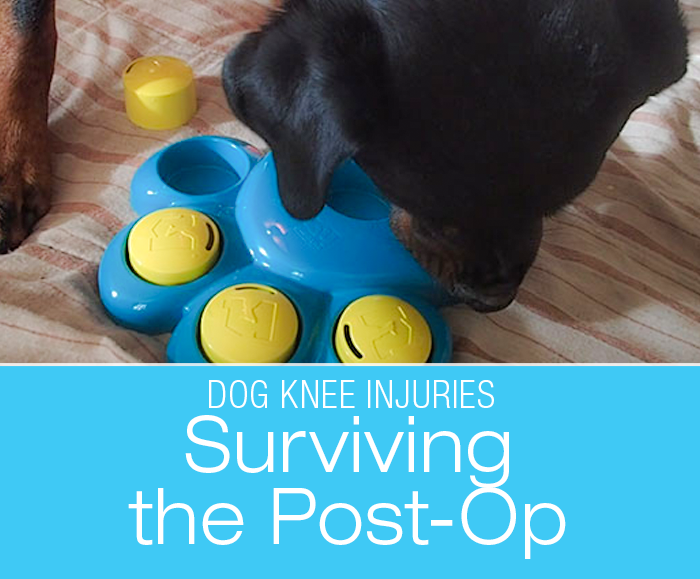
Dogs are survivors. They don’t sulk or complain; they take what there is and make the best of it. Dogs have an amazing ability to adapt and make things work. This is probably when the difference between a dog and a human attitude is the most profound.
The other good news is that your dog is on his way to get well from the moment of the surgery. That’s what I kept telling Jasmine–and more importantly, myself–when I was counting the days. You are one day closer to getting your life back. And then two …
Prepare your home
It will make it easier for both you and your dog to plan ahead and get some things ready before the surgery. Of course, if you have a little dog, some of the points below won’t apply because you can carry your dog around. However, large breed dogs are more likely to suffer an ACL injury.
Activity restrictions
After your dog comes home, you will have to restrict his movement. Prepare a comfortable and safe place for your dog, ideally somewhere near you.
He will not be allowed to use stairs. This means he will be restricted to the main floor for some time. Think about how you’re going to make this work, so your dog is excluded from your life as little as possible. Good spirits are important for physical healing.
We dealt with that by moving all our activity to the main floor, and because our bedrooms are on the second floor, I slept with Jasmine in the kitchen. Clearly, you don’t have to go to the same extreme, but whatever you’re going to do, have it figured out beforehand.
Chemical restraint
If your dog is full of energy and you feel that you might not be able to keep them calm, ask your surgeon about medical help. Trazodone is medication that is making its way in the post-op management and it is become popular among surgeons.
Further reading: Dog Recovery Chemical Restraint: Our Use of Trazodone during Cookie’s Iliopsoas Injury Recovery
Slippery surfaces
Slippery surfaces can be a danger to your dog after the surgery. You can assist your dog when walking on them, or you can do what we did–buy some cheap carpets and rugs and cover the entire main floor. Problem solved.
If you cannot slip-proof your floors, consider slip-proofing your dog, such as with ToeGrips.
Further reading: Facilitating Dog Injury Recovery: Cookie’s Recovery from Iliopsoas Injury—Preventing Slips with ToeGrips
Stairs
Are there a couple of stairs on the way to his potty place? Again, you can assist your dog by supporting him with a towel (towel-walking) or, if you have the means, you can build a simple ramp. Jasmine didn’t like the idea of towel-walking at all. She would either freeze or move awkwardly backward – clearly not very helpful when trying to assist her up and down the steps. She did, however, love her ramp. We also covered it with an outdoor rug to make a safe, non-slippery surface.
If getting a ramp, make sure it’s comfortably wide and with a very mild incline for safety (which means it will need to be fairly long as well).
Further reading: Functional Dog Ramps: The Ups And Downs Of Dog Ramps
Prepare your dog
Towel-walking and support harnesses
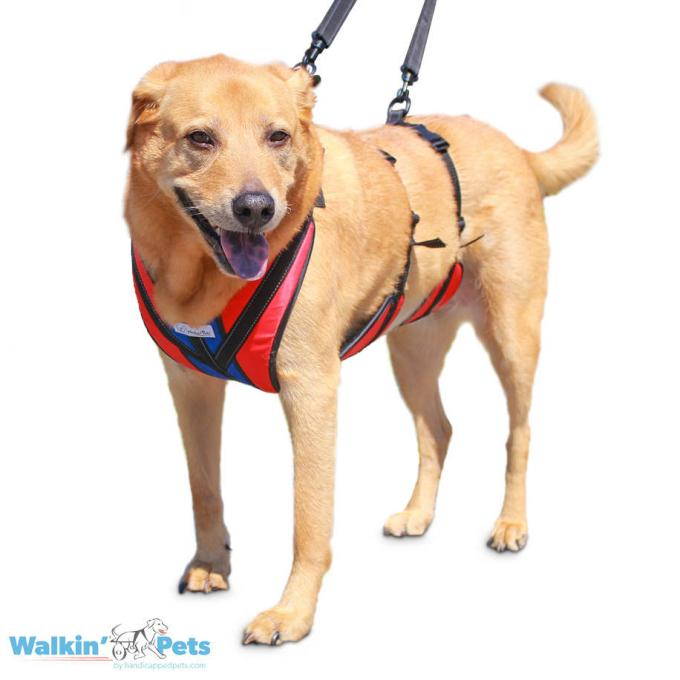
If you never tried towel-walking your dog before, you might want to try and see how he responds to it. Place a towel under his belly and support his weight when walking. There are also some cool products designed for this purpose. In any case, I think it’s a good idea to have this figured out beforehand also.
Some provide support strictly for the hind end, some for front and back. I recommend you pick one with sufficient contact area, so no straps are digging into your dog’s flesh. We have one of these below. We like that it is versatile, simple, comfortable for the dog, and easy to put on. There are other products designed for supporting the hind end only.

Prepare yourself
The post-op is going to be quite similar regardless of which surgery you choose for your dog. It will be a long journey. Seeing the light at the end of the tunnel is what will help you to get through it.
Prepare yourself for a visual shock. When your dog comes back home, his leg will be shaved, bruised, and with a long incision. He might be quite spaced out from the surgery and the meds. When Jasmine came home, her eyes looked quite bewildered. He will be using the leg very little or not at all.
Do your best to make him comfortable. Plenty of deep sleep is important for the healing process.
Have your vet explain the post-op rehabilitation to you in detail. You will probably get a printed sheet – read it and ask questions until you understand everything you need to do. You can see an example of what such a plan should look like here. Your veterinarian needs to follow your dog’s recovery progress and adjust the rehab strategies based on your dog’s progress.
Taking care of the incision
Keep an eye on the incision. Make sure it remains dry and clean, do not allow your dog to lick it. This can lead to infections, and neither you nor your dog need additional trouble. The incision shouldn’t be bleeding or oozing.
TIP: We found that Preparation H (yes, the hemorrhoid ointment) works wonders in promoting faster deep wound healing.
The PROM is not a party
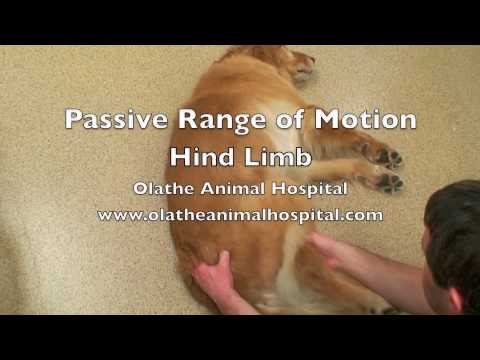
Passive Range of Motion exercise (PROM) is an important part of your dog’s post-op program. Flexing and stretching exercises that promote joint health prevent the muscles’ contraction and stimulate blood and lymphatic flow.
However, there is a good chance your dog won’t like it at all. Have your veterinarian show you how to do the exercise properly. I recommend you consider muzzling your dog for the exercise (a simple cloth muzzle works fine).
Don’t use force. If the joint is too painful to do the exercise, consult your veterinarian about pain management.
Bringing it home
Safety is the most important part of the post-op period. Do everything you can to prevent any mishaps. One bad slip or one bad jump off the couch can be disastrous.
Follow your dog’s post-op schedule religiously. The better you do with that; the better and faster your dog will recover.
Figure out ways of entertaining your dog during his restricted exercise period. Try some clicker training. Get a lot of yummy chew toys. You can even try some dog companion videos, such as the ones by Stanley Coren.
Surviving the post-op after your dog’s surgery will feel like a lifetime. But that too shall pass.
Wishing your dog perfect recovery
Related articles:
CCL Surgery Post-Op Care: Example Plan for Your Dog’s Recovery after Cruciate Ligament Surgery
Canine Post-Op Physical Therapy: Best Practices After Your Dog’s Surgery
Dog Injury or Surgery Recovery: Mishaps versus Setbacks
Talk to Me about ACL Injuries
Further reading:
Dog Cruciate Surgery After Care