


If you spend much time on websites dedicated to canine nutrition, you’re bound to run into a debate over Salmonella.

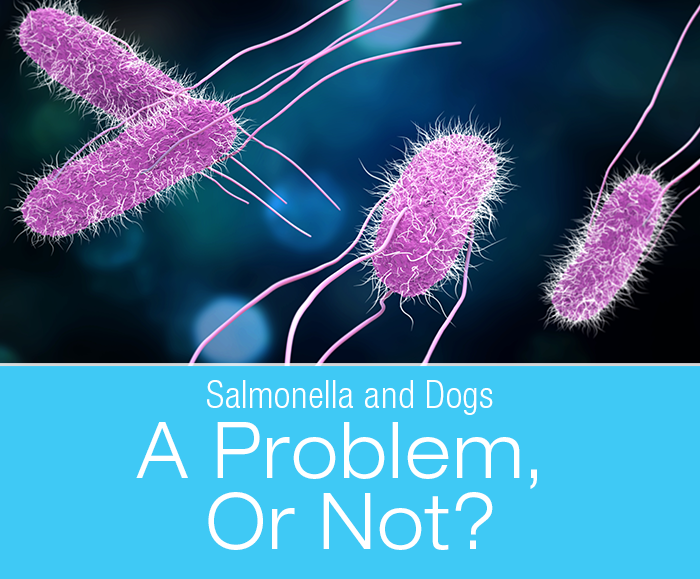
In general, veterinarians have considered salmonellosis (a disease caused by infection with Salmonella bacteria) to primarily be a problem in dogs that are fed raw or undercooked meats. However, the Diamond pet food recall shows that to protect both dogs and people, all owners need to be informed about the disease, regardless of what they feed their pets.
Canine salmonellosis is an interesting condition.
Many healthy, adult dogs that become infected never show any clinical signs – dogs are actually quite resistant to the disease. However, these individuals are still problematic. They are capable of infecting people and other animals when they shed the bacteria in their feces.
Dogs at the greatest risk for developing salmonellosis include
- very young
- very old,
- stressed
- immunocompromised
Let’s take a look at what happens in a dog’s body when its natural defenses cannot keep Salmonella under wraps.
Salmonella bacteria that survive their trip through the acid environment of the stomach. They attach themselves to the tips of intestinal villi, the tiny finger-like projections, covering the inner surface of the small intestine that greatly increase the organ’s surface area and absorptive capacity.
From there, they invade deeper into the lining of the intestine and multiply.
This process, along with the inflammatory response that results, leads to tissue injury, death, and sloughing. This reduces the intestine’s absorptive surface area, causing the liquid to leak through the intestinal wall, and disrupting the motility of the intestinal tract.
The bacteria can survive in and be shed from a dog’s intestinal lining for at least three to six weeks after the infection has occurred.
Salmonella can also hide out in cells within intestinal lymph nodes, the spleen, or liver.
When these “carrier” dogs become stressed or immunocompromised, the bacteria can take advantage of the situation and become active again, producing illness and/or fecal contamination.
The most common clinical signs associated with a Salmonella infection that is limited to a dog’s digestive system are
- diarrhea (often containing mucus or blood)
- fever
- lethargy
- loss of appetite
- dehydration
- weight loss, and
- abdominal pain
If damage to the intestinal lining is significant enough, Salmonella bacteria have direct access to a dog’s bloodstream.
This can lead to
- septicemia (the bacteria enters the bloodstream). and
- endotoxemia (dead or damaged bacteria release toxins into the bloodstream)
These potentially life-threatening conditions produce symptoms such as pale mucous membranes, rapid breathing, a rapid heart rate, collapse, seizures, shock, and death, often as a result of disseminated intravascular coagulation (a condition during which blood fails to clot or clots inappropriately throughout the body) and multiple organ failure.
So, even though Salmonella infections rarely cause disease in healthy dogs in the prime of their lives, its potential effect on puppies, older dogs, sick animals, and people is so catastrophic that all dog owners should pay the bacteria the respect it deserves.
Related articles:
What Your Dog’s Poop Can Reveal About Their Health? Fecal Analysis
Further reading:
Yes, dogs can get salmonellosis