


The loud noise of fireworks can be a source of severe stress for dogs. Indirectly, this can lead to death when a dog panics and runs away.
But did you know that fireworks can also poison your dog?

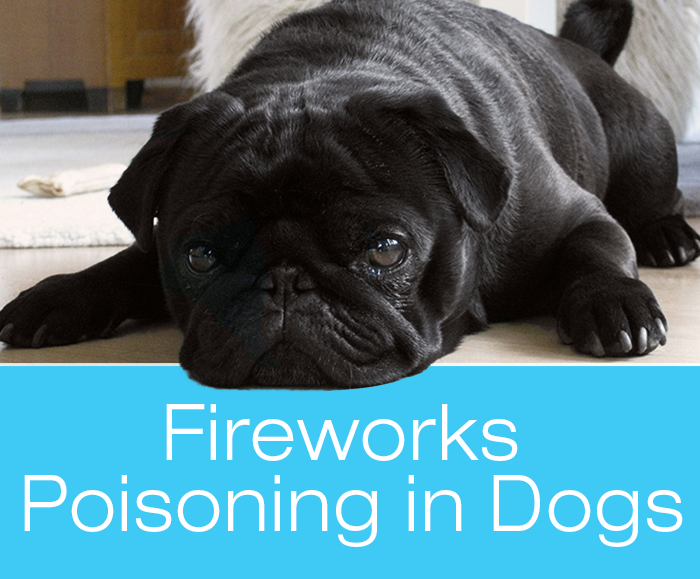
Fireworks poisoning in dogs–have you ever heard about that?
Any big celebration brings stress and health risks to dogs such as
- severe anxiety
- foreign body obstructions
- toxic or dangerous foods
After a night of fireworks displays, the environment is littered with spent fireworks. To us, these are an unwanted mess. To a dog, free toys or snacks. Fireworks and sparklers, though, can make a deadly snack.
Zoe was a year-and-half-old Pug. She was a beloved companion to her human family.
Zoe is no more.
When Zoe found debris from used sparklers, she tasted it and figured it was pretty good. Nobody knew what that happened. It is impossible to supervise a dog every minute of every hour of every day.
Later Zoe started throwing up, acting oddly and became unable to walk.
Zoe’s parents rushed her to a vet.
After running tests, the veterinarians contacted the poison control center.
With the help of the poison control center, they determine what was poisoning Zoe but it was too late. They tried pumping Zoe’s stomach but the poison has already overwhelmed her body. In spite of the intensive care she received, Zoe died early that afternoon.
Fireworks packaging features no poisoning warning.
At least the product that caused Zoe’s death did not–they checked it specifically. The packaging contains warnings to prevent burns and injuries but not a word about the toxic effects when ingested. Granted, not many adults are likely to taste-test these things. Pets, on the other hand, and children, can.
What makes sparklers toxic?
Fireworks contain dangerous chemicals such as potassium nitrate and heavy metals. These things are not for snacking.
Potential symptoms if your dog eats fireworks
Depending on the type of fireworks and the amount your dog ingests, the symptoms can include:
- vomiting
- bloody diarrhea
- abdominal pain
If your dog ingests a large enough amount, they can suffer from the following:
- seizures or tremors
- jaundice (yellowing of the skin)
- shallow breathing
- weakness and uncoordinated movement
- acute kidney failure and,
- in unfortunate cases such as Zoe’s, death
Source: Pet Poison Helpline
Zoe’s parents shared their horrific experience to raise awareness. They hope to save other dogs from losing their lives over this little-know danger.
Zoe’s life ended prematurely
Don’t let this happen to your dog. Let it be Zoe’s legacy that no other dog ever dies to fireworks poisoning.
RIP, dear Zoe.
Read Zoe’s story here.
Common types of fireworks
| Ingredients | |
| Bottle rockets | Gunpowder |
| Firecrackers | Gunpowder Potassium nitrate Charcoal Sulfur |
| Sparklers | Barium dinitrate Strontium carbonate Potassium perchlorate |
| Snakes/Glow worms | Potassium nitrate Carbon Sulfur Perchlorates Aluminum Strontium nitrate Barium |
Clinical signs by ingredient
Chlorates and barium are the ingredients that most commonly land dogs in veterinary hospitals. There is a difference between how unused or spent fireworks affect your dog. Spent display fireworks typically cause more severe issues. What makes spent fireworks more toxic is the spent ash.
| Ingredients | Signs |
| Barium salts | severe hypokalemia which results in: vomiting diarrhea weakness excessive drooling cyanosis heart dysfunction tremors seizures paralysis respiratory failure cardiac shock death |
| Chlorates | vomiting abnormal heart rate destruction of red blood cells hyperkalemia acute kidney failure and more |
| Nitrates | GI upset |
| Corrosive salts | oral or esophageal ulcers |
For more information, see source: Today’s Veterinary Practice
Related articles:
When Is It an Emergency?
Further reading:
Pet Poison Helpline: Fireworks