


Hypothyroidism is one of the most common endocrine (hormonal) diseases I see in dogs.

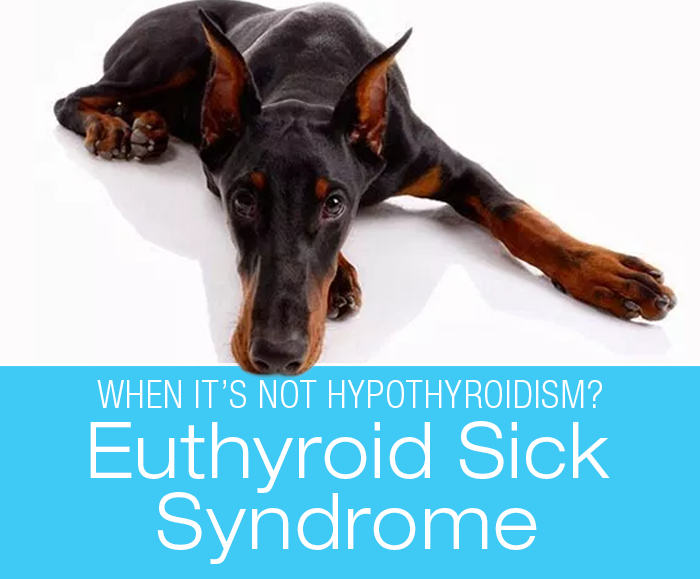
It occurs most frequently in middle-aged (4-10 years old) medium to large-breed dogs. Vulnerable breeds include:
- Doberman Pinschers
- Golden Retrievers
- Irish Setters
- Miniature Schnauzers
- Dachshunds
- Cocker Spaniels
- and Airedale Terriers
Hypothyroidism occurs when the thyroid gland secretes less thyroid hormone than normal.
Common causes include:
- inflammation that destroys the normal thyroid tissue, or
- the replacement of normal thyroid tissue with fatty tissue.
The thyroid hormone affects many parts of the body, and the disease is slowly progressive. Therefore, the signs may be variable and non-specific at first.
Owners may notice
- weight gain
- lethargy
- intolerance of exercise
- heat-seeking behavior due to a lowered metabolism
- skin and hair coat changes (e.g., dull hair coat, hair loss, increased skin pigmentation)
- skin infections may be evident also
- other possible signs include neurologic and/or reproductive abnormalities
However, these symptoms are not specific for hypothyroidism and can be caused by a variety of diseases.
Diagnosing hypothyroidism is not straight- forward.
The supporting signs and symptoms must be backed up by laboratory tests. Routine testing (such as a complete blood count and a biochemical analysis) may provide only supportive evidence of thyroid disease or may reveal another disease that is mimicking thyroid disease.
More specific thyroid function tests that can show whether the thyroid gland is normal and include:
- total T4
- free T4
- Thyroid Stimulating Hormone or TSH
However, they do not conclusively prove that a dog’s illness is due to thyroid gland dysfunction.
Many non-thyroidal diseases and medications can cause a syndrome known as Euthyroid Sick Syndrome.
This syndrome results in reduced total T4 concentrations and mimics a hypothyroid condition
- thyroid levels are low
- the dog may have some of the symptoms commonly seen with hypothyroidism, and
- clinical improvement may be seen following administration of thyroid medication (which is the treatment for hypothyroidism)
However, the thyroid gland is actually functioning normally.
Any severe systemic disease can cause low thyroid concentrations including neurologic diseases, heart failure, renal disease, and cancer. Some medications that can cause Euthyroid Sick Syndrome include
- phenobarbital
- zonisamide
- sulfa antibiotics
- clomipramine
- aspirin
- corticosteroids (including topical formulations)
To complicate matters further, some breeds of dogs normally have low serum total T4 and free T4 concentrations including
- Greyhounds
- Scottish Deerhounds
- Other sight hounds
- Alaskan sled dogs (particularly during intense training or racing)
The most specific test that is currently available for differentiating hypothyroidism from the Euthyroid Sick Syndrome is the measurement of free T4 by equilibrium dialysis.
It has the greatest diagnostic sensitivity and specificity. That means that when thyroid disease is present, the free T4 is most likely low and when the free T4 is low, thyroid disease is likely to blame.
Ultrasound of the thyroid gland by an experienced radiologist and scintigraphy (a thyroid scan) can also provide useful information. However, due to the cost and limited availability, these tests are not commonly used.
Veterinarians must be careful when evaluating a dog that looks like he has hypothyroidism.
An accurate diagnosis must be reached before proper treatment can start and the patient starts down the road to recovery.