


Why does it matter why is my dog limping? Isn’t the treatment is the same?
There is a long list of why your dog might be lame and different causes require different measures. Potential lameness causes further break down into two categories depending on whether the limping is acute or ongoing.
When your dog suddenly becomes lame, you might be looking at anything from toe or toenail injuries, foreign bodies, stings, and infections, to joint injuries or broken bones. Chronic limping, especially if it keeps getting worse rather than better, is a whole different story.
Further information: Why Is My Dog Limping? Causes of Lameness in Dogs


Acute or chronic
How can you tell whether your dog’s limp is an acute, chronic, or progressive problem? Further, when more than one leg is sore, you might not even see a limp at all. Rather, there might be other subtle changes in your dog’s behavior, such as stiffness or reluctance to move.
And sometimes, to complicate things further, you might have an acute trauma on top of a chronic problem. For example, just because your dog has arthritis, it doesn’t mean they cannot rupture their cruciate ligament. On the contrary, compensation leads to altered use of the body, increasing risk of injuring other parts.
Further reading: Injury and Compensation in Dogs
Figuring out the cause
First, check for any obvious wounds or foreign bodies. You may or may not need to see a vet with pad or nail injuries, infections, bites, or stings. If you doubt whether you can provide appropriate wound care, see a veterinarian.
Helpful resources
If you find no external signs and your dog is not in severe pain, rest and exercise restriction are a common measure. Often, lameness can improve with rest. However, if your dog is not improving, it’s time to get a diagnosis. That, however, can be trickier than you think.
Further reading: Why Is My Dog Limping? Causes of Lameness in Dogs
If you’re lucky, your veterinarian will diagnose your dog’s problem during physical examination. Although, they might recommend x-rays for a better picture of what’s going on.
However, findings from both can be misleading. For example, your veterinarian might find a sore muscle and diagnose it as a muscle injury. But the sore muscle can be secondary to the main problem—a compensatory injury. Such as in Cookie’s case, she had sore biceps and back muscles compensating for her sore elbows. It can take work to peel the onion.
Additionally, your dog’s x-rays might show arthritis in one or more joints—that’s why he’s limping then, right? However, what shows up on the x-rays doesn’t always reflect how the dog feels. The pain level and the radiographs can be a substantial mismatch. And it doesn’t mean that there isn’t a new problem on top of the old one. A dog with arthritis can still suffer other injuries; in fact, existing conditions make it more likely.
Important note:
If your dog’s limp is getting worse rather than better, insist on x-rays, particularly with a large breed dog.
Recently, a member of my dog health issues group sought advice for her Rottweiler. The dog has been limping, and his lameness didn’t respond to pain medication. At first, they suspected arthritis. But then, the dog developed an obvious swelling around the wrist. The owner was reluctant to agree to the x-rays the veterinarian recommended. I urged her to have the radiographs done. With a limp that’s getting worse, it’s essential to consider bone cancer as a potential cause.
I insisted on x-rays when Cookie’s front leg lameness wasn’t going away to see if it helps with the diagnosis but especially to rule out osteosarcoma.
Potential causes of acute limping
- toe and toenail
- injuries
- foreign bodies
- infections
- footpad
- injuries
- foreign bodies
- infections
- stings and bites
- bruising
- muscle injuries
- ligament injuries
- tendon injuries
- joint injuries or dislocation
- broken bones
- spinal misalignment or injury
- neurological conditions
Potential causes of chronic limping
- hip dysplasia
- elbow dysplasia
- luxating patella
- shoulder instability
- arthritis
- OCD
- tick-borne diseases
- developmental disorders
- inflammatory conditions
- autoimmune conditions
- neurological conditions
- cancer
Different lameness causes require different interventions. Therefore, getting to the bottom of the cause is essential. Often further diagnostics are warranted and can include:
- stride and weight-bearing analysis
- x-rays
- CT scan
- MRI
- arthroscopy
For example, muscle sprains and strains might need just rest, activity restrictions, and perhaps some anti-inflammatory medication. However, what if you dismiss lameness as a minor strain and it’s a spider or snake bite instead? Or dismiss progressing tick-borne disease or even bone cancer as arthritis?
Example stories

Dog Lameness Assumption Trap: Tosha’s Snake Bite
At first, Tosha’s parents thought that she had injured her cruciate ligament. What would happen if they weren’t paying attention and failed to discover the snakebite, which was the real cause of her lameness?
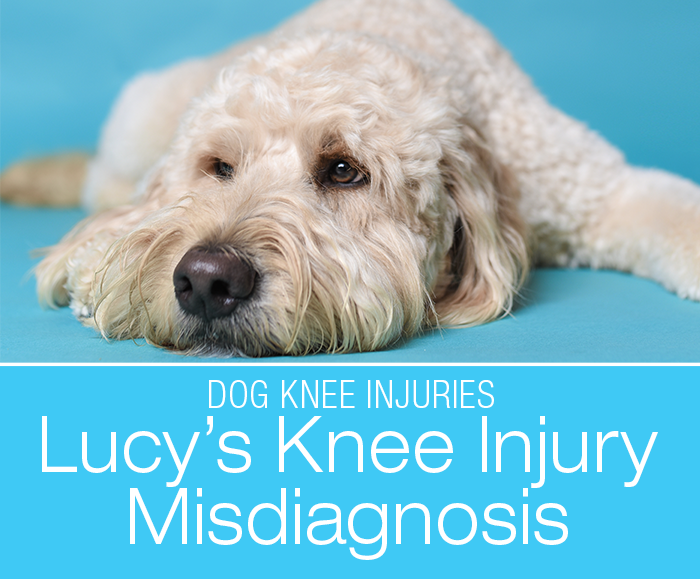
Dog CCL Injury Misdiagnosis: Lucy’s Hind Leg Lameness
Lucy’s hind leg lameness was diagnosed with cruciate injury by her veterinarian and almost underwent surgery. The cause of her lameness was iliopsoas injury instead.

Rocky Mountain Spotted Fever: BooBoo’s Story
Lameness was BooBoo’s first symptom. The veterinarian put her on anti-inflammatory medications for suspected pain from hip dysplasia. Meanwhile, BooBoo was suffering from Rocky Mountain Spotted Fever.

Limping Border Collie: What Caused Bruder’s Lameness?
Bruder became lame on his front leg. His veterinarian couldn’t find an apparent cause and prescribed pain medication and rest. When the lameness didn’t improve, he x-rayed the whole leg. Everything looked normal, but Bruder was still lame. Bruder had a piece of glass in his foot that was hard to find.

Misdiagnosed Lameness in a Dog: Cody’s Spinal Cord Injury Diagnosis
After a tumble, Cody became lame on his front leg. The veterinarian diagnosed her with spinal injury. What was Cody’s problem? Shoulder tendinitis.

Arthritis or a Knee Injury? Oscar’s Lameness Story
Oscar had mild arthritis in his hips which gave him moderate problems that resolved with medical treatment. When Oscar became fully lame, the first suspects were his hips or knee injury. Instead, Oscar had a raw wound on the inside of his toe.

Sores and Lameness in a Dog: Is there a Connection between Star’s Mysterious Lameness and Skin Issues?
When Star started having sore legs and difficulty getting around, the veterinarian suspected hip dysplasia. But x-rays showed no evidence of that. Star wasn’t doing well but diagnosis remained elusive. Eventually, it turned out that Star had canine herpesvirus.

Front Leg Lameness in a Rottweiler: Cookie’s Sore Front Legs
Cookie had an ongoing issue with front leg lameness, shifting from right to left. Was it her shoulders? Was it her spine? It was a long road to getting an elbow dysplasia diagnosis.

Bone Cancer in a Dog: Wallace’s Osteosarcoma
Wallace started with a mild limp after one of his play sessions. Surely it was just a sprain or strain, wasn’t it? His lameness was waxing and waning and wasn’t going away. Then, Wallace’s mom found a hard swelling on his leg.

Acute Lameness in a Dog: JD’s Leg Injury And Hip Dysplasia
JD ran down some stairs with his friend and stumbled. He became extremely lame on his hind leg. X-rays revealed hip dysplasia and hip replacement was on the table. And then, with some rest and physical therapy, the lameness resolved.
Further, sometimes what might look like lameness might have nothing to do with the limbs. For example, with larger dogs, what might look like their arthritis acting up could be life-threatening splenic tumor.

Walks Like A Splenic Tumor, Quacks Like A Splenic Tumor … It Must Be A UTI?
Mandy indeed did have some arthritis and, because of her trouble walking, ended up with a UTI. But her primary problem had nothing to do with her legs.

What Turned Out Not Being An Adverse Drug Reaction After All—JD’s Story
When JD started having a hard time walking, it looked like his hips were bothering him at first. However, his problem evolved into ataxia.
In closing
What have you learned from the above stories?
It is true that rest and pain management helps with many garden-variety sprains and strains. But other causes of limping might require a whole other approach. Rest and pain management won’t resolve venomous bites, infection, foreign bodies, cancer, and so on.
Make sure you get to the bottom of the cause behind your dog’s lameness.
Have you dealt with a limping dog? What was the diagnosis?
Related articles:
Why Is My Dog Limping? Causes of Lameness in Dogs
Common Limping Misdiagnoses in Dogs
Further reading:
Why Is My Dog Limping?
Dog Lameness – Causes and Treatment of Limping in Dogs