


Obesity is a problem for both dogs and their parents.
Yet, the most important thing you can do for your dog to keep them healthy, happy, and living longer is to keep them at an optimal weight.
With all else being equal, a life-long reduction in caloric intake can extend your dog’s life by almost two years on average. In the corresponding study, the dogs were fed 25% fewer calories than the “normal” amount. They ate the same food and lived the same lives as the control group. Yet, they lived longer.
Long-term restriction of energy intake without malnutrition is a robust intervention that has been shown to prolong life and delay age-related morbidity.
~PubMed


Think about it this way
Imagine there are only so many calories your dog is meant to consume in their lifetime. The sooner they consume it, the sooner they die. What if there was a thing?
What is wrong with a little extra fat pad?
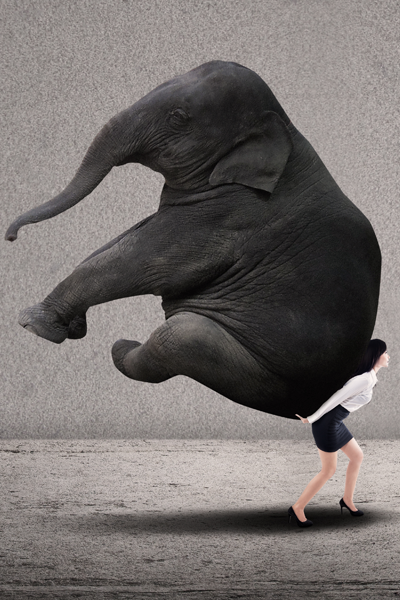
The mechanical aspect
There is a mechanical aspect of the matter. That is relatively self-explanatory, isn’t it? Carrying around all that extra weight is exhausting; it puts an undue burden on joints, muscles, bones, and cardiovascular system, messes with normal mobility, increases the risk of injuries, and a degree of wear and tear the body is not designed for.
The biochemical aspect
If that wasn’t bad enough for you, there is the biochemical impact as well. For the sake of simplicity, think about your dog’s obesity like this.

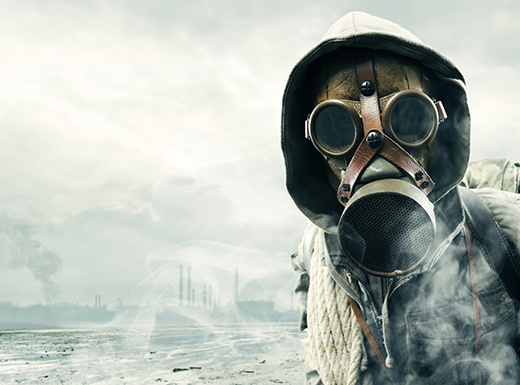
Your dog’s obesity as an equivalent of ecological disaster within.
Well, maybe it looks more like this.

Or maybe a combination of the two.
If we stick with the elephant analogy, it would not only be like carrying one around all the time but like carrying one around all the time on the inside. And yes, that means including all the elephant’s dung and everything. Pretty graphic, is it? It’s my metaphor and I’m sticking with it.
Fat tissue isn’t an inert mass
It is, in fact, highly metabolically active. It produces hormones, growth factors, and signaling molecules. All of these things are good and useful, until the scale tips (pun intended). These metabolites are involved in appetite control, energy balance, inflammatory response, and others.
The more excess fat tissue, the more the regulation gets out of whack.
The result is chronic inflammation and dysregulation. In other words, an ecological disaster. Kind of like when you leave the house for the weekend and your teenager throws a party. Except this party goes on all the time. How do you think the house might fare?
The negotiation
Do you believe that our inner child is alive and well, even though sentenced to silence? Most of us have had this type of conversation both as a child and as an adult:
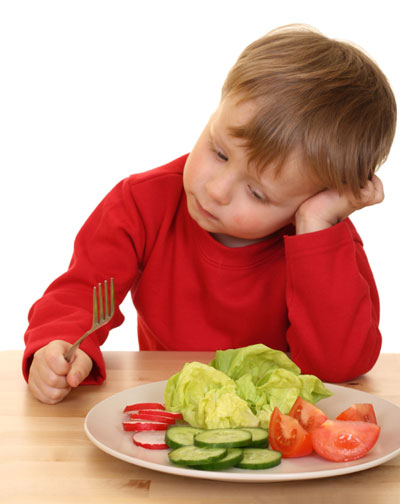
Adult: “You have to eat your vegetables.”
Child: “Why?”
Adult: “Because they are good for you.”
Child: “Why?”
It doesn’t matter how many explanations the adult might offer, they will always be followed by another why. Why?
What strikes me as interesting is this – did you ever hear a child ask why he or she should have another piece of chocolate? I haven’t. Why?
I am no psychologist but I think there is more to this than the thirst for education. I think this is more about negotiation. Is there a really good reason why I should eat my vegetables or do you just like making me do things? Is there a reason that would be good enough for ME?
No TV tonight
Yeah, I’ll give you a good enough reason—either you eat your vegetables or no TV tonight!
As we grow up we stop asking these questions. Why? Are we that much more accepting of annoying things? I believe we still want to ask, but because we are all grown up and civilized we don’t—that would just be childish. And there usually isn’t anybody who could get us grounded or take away our TV privileges.
Absence of the stick isn’t absence of consequence
Does that mean there won’t be any consequences?
Of course, there will be! But who is going to worry about a consequence they can’t see coming? So what do we often do instead? Nothing!
“Well, I don’t see any good reason why I should (fill in the thing you don’t want to do).”
But what if there was a really good reason, which we’ll never find out about, because we don’t ask! If we found such a reason would that be good enough to make us do the right thing?
How it translates to dog obesity
Let’s take the issue of obesity in dogs. Left and right we keep hearing that we should keep our dogs thin. And yet dog obesity has become an epidemic. Why? The conversation with your vet would probably go something like this:
Veterinarian: “Your dog needs to lose weight.”
Client: “Uh-huh.”
Veterinarian: “It is bad for his health to be obese.”
Client: “Uh-huh.”
But the vet isn’t there looking over your shoulder to make sure you eat your vegetables, is he? 
So what happens? You come home and find a hundred reasons why it either doesn’t matter or you cannot get your dog to lose weight. Why?
- “I think he looks just fine the way he is.”
- “He always looked like this and he is healthy.”
- “It’s just winter fat.”
- “Well, he loves his treats.”
- “How can I train him without treats?”
- “Well, he looks at me with those eyes I have to share my dinner with him.”
- “I don’t have the time to exercise him.”
- “The weather has been bad.”
- “He is hungry! He wouldn’t eat if he wasn’t hungry!”
The list goes on. A hundred reasons for your dog to remain obese and only one reason to get him thin. So what do you do? Nothing.
What if I told you that there really are very good reasons to get your dog to lose weight? Would that help?
In the meantime, I’m afraid, no TV tonight for you, my friend.
Note to consider
Jasmine’s vet always emphasized that a dog will eat to the limiting nutrient. It is an important point to consider when you’re trying to get your dog to lose weight and not succeeding while your dog feels hungry. A limiting ingredient can be a protein or a mineral, and the dog’s body is trying to get in what it needs while overeating all the others. This means you might need to take a close look at how complete and balanced your dog’s food is or—an approach that makes the most sense to me—provide enough variety that helps avoid any such deficiency.
Related articles:
Obesity in Dogs: Veterinarians Talk About The Biggest Toll Our Dogs Pay For Obesity
Further reading:
6 Reasons Why It’s Hard for Veterinarians to Talk About Overweight Pets